
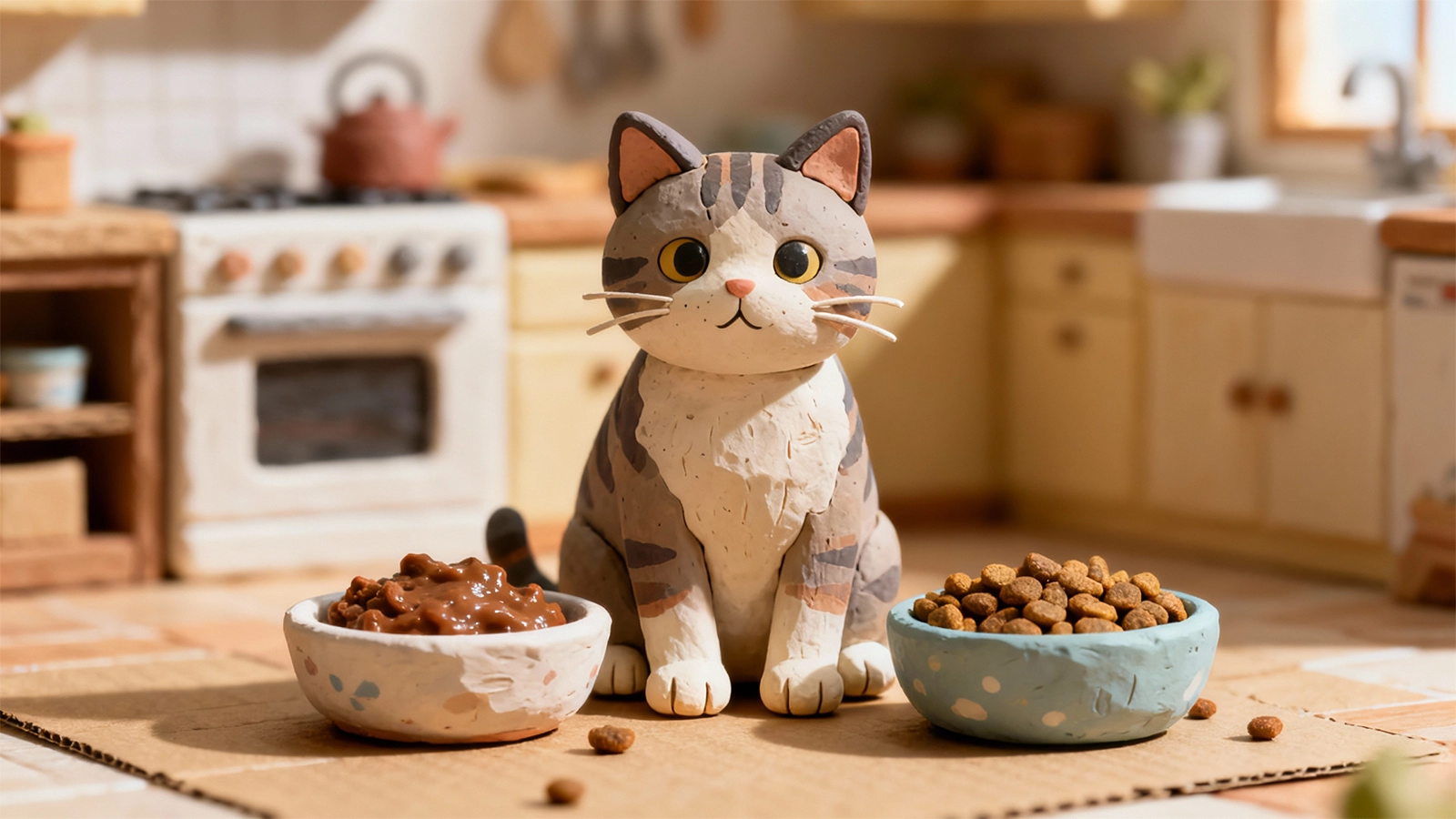
Standing in the pet food aisle can feel strangely overwhelming.
Rows of shiny cans.
Towering bags of kibble.
Bold promises printed in cheerful fonts. 🐾
Most cat owners eventually ask the same question: Should I be feeding wet food or dry food for long-term health?
The honest answer isn’t a simple either-or.
Cats are biologically unique, nutritionally sensitive, and wonderfully stubborn. What works beautifully for one may cause subtle issues in another.
This guide breaks down the real differences between wet and dry cat food—without myths, marketing noise, or fear-based advice. You’ll learn how each option affects hydration, digestion, teeth, weight, behavior, and aging, so you can make confident, informed choices that support your cat for years to come. 💡
Why This Question Matters More Than Ever
Domestic cats live longer than ever before.
With longer lives come chronic health considerations: kidney function, urinary health, dental disease, obesity, and inflammation.
Food plays a quiet but powerful role in all of these.
A cat’s diet doesn’t just fuel daily energy—it shapes hydration levels, metabolic balance, gut health, and even behavior over time. Small daily choices compound into big outcomes.
Understanding the Natural Diet of Cats
Before comparing cans and kibble, it helps to understand what cats evolved to eat.
Cats are obligate carnivores.
That means their bodies are designed to thrive on animal-based nutrition, not plant-heavy diets.
In the wild, a cat’s prey provides:
-
High-quality animal protein ✔️
-
Moderate fat
-
Minimal carbohydrates
-
High moisture content (often 70%+) 💧
This moisture component is critical—and it’s where wet and dry foods begin to diverge.
What Exactly Is Wet Cat Food?
Wet food includes:
-
Canned food
-
Pâté
-
Chunks in gravy or broth
-
Fresh refrigerated cat food
Typical Characteristics of Wet Food
-
70–80% moisture
-
Strong aroma and flavor
-
Softer texture
-
Often higher protein density per calorie
Wet food closely mimics the moisture profile of a natural prey-based diet.
Why Cats Often Love It 😻
-
Smell is stronger (important for cats)
-
Easier to chew
-
Feels more “rewarding” to many cats
For picky eaters, seniors, or cats with dental issues, wet food can be a game-changer.
What Is Dry Cat Food?
Dry food—commonly called kibble—is shelf-stable and widely used.
Typical Characteristics of Dry Food
-
6–10% moisture
-
Crunchy texture
-
Higher carbohydrate content
-
Energy-dense
Dry food is convenient, affordable, and easy to portion, which explains its popularity.
But convenience doesn’t automatically equal optimal.
Hydration: The Single Biggest Difference 💧
Cats have a low thirst drive by nature.
They evolved to get most of their water from food—not from drinking bowls.
Wet Food and Hydration
Wet food contributes significantly to daily fluid intake.
This can:
-
Support kidney health
-
Reduce urinary crystal risk
-
Improve bladder function
-
Support digestion
For cats prone to urinary issues, hydration can be protective.
Dry Food and Hydration
Cats eating mostly dry food must consciously drink water to compensate—and many simply don’t drink enough.
Even with fountains and fresh bowls, total fluid intake is often lower.
💡 Long-term dehydration can quietly stress the kidneys and urinary tract over time.
Protein Quality and Digestibility
Both wet and dry foods can contain high-quality protein—or poor-quality protein.
The difference lies in formulation and processing.
Wet Food Protein Advantages
-
Often higher meat content
-
Less reliance on plant fillers
-
Easier digestion for sensitive cats
Dry Food Protein Considerations
-
Protein may be diluted by starch
-
Heat processing can reduce amino acid availability
-
Requires careful label reading
Not all kibble is bad—but quality matters enormously.
Carbohydrates: How Much Is Too Much?
Cats have no dietary requirement for carbohydrates.
Dry Food Reality
Kibble needs starch to hold its shape.
This means most dry foods contain significantly more carbohydrates than wet foods.
High-carb diets may:
-
Contribute to weight gain
-
Affect insulin sensitivity
-
Increase inflammation in some cats
Wet Food Advantage
Wet foods typically contain fewer carbs and align more closely with feline metabolism.
Dental Health: Crunch vs. Reality 🦷
Many people believe dry food cleans teeth.
Unfortunately, this is mostly a myth.
Why Kibble Doesn’t Clean Teeth
-
Cats don’t chew like humans
-
Kibble often shatters on contact
-
Plaque forms below the gumline
Dental disease is best addressed through:
-
Dental treats approved by veterinary organizations
-
Tooth brushing (yes, it’s possible!)
-
Regular veterinary checkups
Wet food does not inherently cause dental disease.
Weight Management and Portion Control
Dry Food Challenges
-
Easy to overfeed
-
Calorie-dense
-
Free-feeding encourages grazing
This can quietly lead to weight gain over months or years.
Wet Food Benefits
-
Higher volume per calorie
-
Increased satiety
-
Easier portion control
Many cats feel fuller on fewer calories when eating wet food.
Behavioral and Emotional Factors 🍽️
Food isn’t just nutrition—it’s experience.
Cats often associate meals with safety, routine, and comfort.
Some cats become more food-focused or vocal when diets don’t meet their needs.
Midway through dietary transitions, owners sometimes notice how feeding choices intersect with nighttime restlessness and communication patterns tied to unmet physical or emotional needs.
Texture, aroma, and feeding schedule all influence how secure a cat feels around meals.
Cost, Convenience, and Real Life
No discussion would be complete without acknowledging reality.
Dry Food Wins On:
-
Cost efficiency
-
Storage
-
Automatic feeders
-
Busy schedules
Wet Food Wins On:
-
Hydration
-
Palatability
-
Nutritional alignment
-
Support for aging bodies
Many households successfully use a combination approach, blending wet and dry strategically.
Mixed Feeding: A Practical Middle Ground ⭐
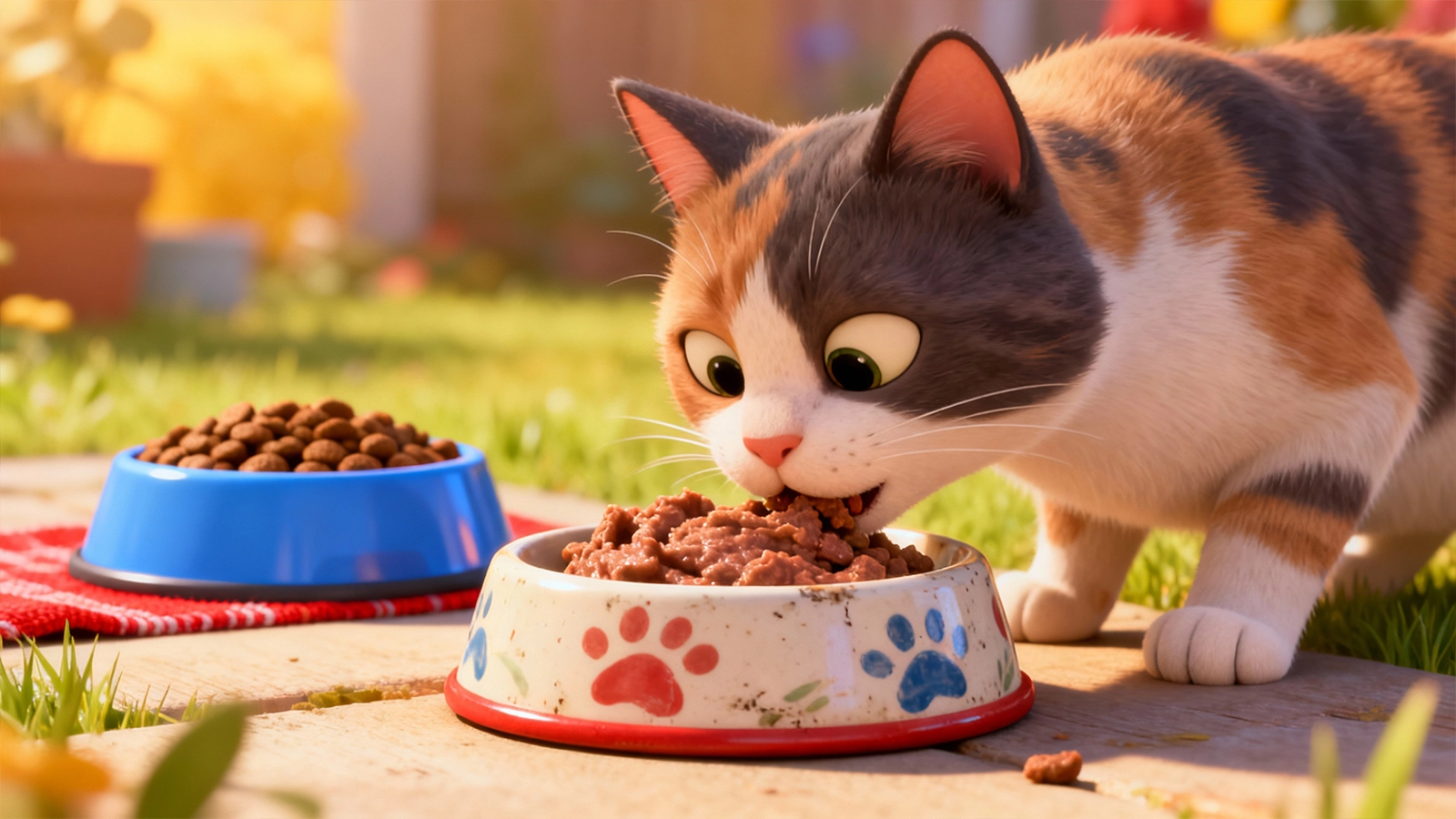
Feeding both wet and dry food can offer balance.
Popular strategies include:
-
Wet food meals + small dry snacks
-
Wet food in the morning, dry at night
-
Primarily wet with limited kibble enrichment
The goal is intentional use—not default habit.
Age, Health, and Individual Needs
There is no universal best food—only best fit.
Factors that influence the ideal choice:
-
Age (kitten, adult, senior)
-
Activity level
-
Medical history
-
Dental health
-
Preferences (yes, they matter!)
Kittens often tolerate dry food well, while seniors benefit greatly from moisture-rich meals.
Reading Labels Without Losing Your Mind 📦
Focus on:
-
Named animal proteins first
-
Clear fat sources
-
Minimal fillers
-
Appropriate calorie density
Ignore:
-
Buzzwords without context
-
Pretty packaging alone
-
One-size-fits-all claims
Quality matters more than format.
The Emotional Side of Feeding Your Cat
Feeding is love.
It’s ritual.
It’s one of the strongest daily bonds you share.
The “best” food is one that:
-
Nourishes the body
-
Supports long-term health
-
Fits your life
-
Keeps your cat content and thriving 🐾
Wet Food and Long-Term Kidney Health
Kidney health is one of the most common concerns in aging cats.
Chronic kidney disease often develops quietly, showing subtle signs long after damage has begun.
Hydration plays a central role here.
Why Moisture Matters So Much
Cats consuming moisture-rich diets tend to produce more dilute urine.
This reduces the workload on the kidneys and supports toxin elimination over time.
Wet food doesn’t cure kidney disease—but it can reduce strain and support longevity, especially in middle-aged and senior cats.
Urinary Tract Health and Food Choice 🚽
Urinary issues are among the top reasons cats visit the vet.
Common Problems Include:
-
Crystals
-
Stones
-
Inflammation
-
Blockages (especially in males)
Low moisture intake is a major risk factor.
Wet food supports:
-
Increased urine volume
-
Reduced crystal concentration
-
Better bladder flushing
Cats with a history of urinary problems almost always benefit from diets higher in moisture, regardless of brand or format preferences.
Blood Sugar and Metabolic Health
Cats process carbohydrates differently than humans or dogs.
Dry Food and Blood Sugar
Because kibble requires starch to hold its shape, many dry foods contain more carbohydrates than cats naturally need.
For some cats, especially those predisposed to:
-
Obesity
-
Insulin resistance
-
Diabetes
this can matter long-term.
Wet Food and Glucose Stability
Lower carbohydrate levels in wet food help support:
-
More stable blood sugar
-
Lean muscle mass
-
Healthy weight maintenance
This doesn’t mean dry food automatically causes diabetes—but diet composition plays a role over time.
Dental Health Revisited: What Actually Helps 🦷
Dental disease affects most cats by age three.
While dry food doesn’t clean teeth, diet still influences oral health indirectly.
Helpful strategies include:
-
Dental treats approved by veterinary councils ✔️
-
Water additives
-
Regular dental exams
-
Tooth brushing (even weekly helps!)
Food texture alone isn’t the solution—routine care is.
Palatability, Appetite, and Aging
As cats age, appetite often changes.
Smell dulls.
Teeth become sensitive.
Digestion slows.
Wet food often becomes more appealing due to:
-
Strong aroma
-
Softer texture
-
Easier chewing
For seniors or cats recovering from illness, wet food can help maintain calorie intake and prevent muscle loss.
Behavior, Routine, and Mealtime Satisfaction
Cats are creatures of habit.
When feeding routines don’t align with their needs, behaviors can surface:
-
Excessive vocalization
-
Food obsession
-
Nighttime restlessness
Late in the journey of understanding food choices, some owners notice how unmet nutritional or timing needs can subtly influence nighttime behaviors that disrupt both feline and human sleep.
Food quality, timing, and satisfaction all play a role in emotional well-being.
The Convenience Factor (and How to Use It Wisely)
Dry food isn’t the villain—it’s a tool.
Used intentionally, it can:
-
Support puzzle feeders
-
Allow flexibility for busy schedules
-
Help with calorie-controlled snacking
Problems arise when dry food becomes the default and the majority of calories without consideration of hydration.
Smart use beats rigid rules.
Creating a Feeding Plan That Actually Works 🐾
Instead of asking “wet or dry?”, try asking:
✔️ Does my cat stay well-hydrated?
✔️ Is weight stable and healthy?
✔️ Are stools consistent and easy to pass?
✔️ Is my cat satisfied after meals?
✔️ Does this fit my lifestyle long-term?
These answers matter more than ideology.
Sample Balanced Feeding Approaches
Option 1: Wet-Focused
-
Wet meals twice daily
-
Small dry portion for enrichment
Option 2: Mixed Routine
-
Wet food morning and evening
-
Measured dry meal midday
Option 3: Dry-Heavy (With Support)
-
Primarily dry food
-
Added water, broths, or hydration strategies
There’s flexibility—as long as hydration and quality are addressed.
When Dry Food May Be the Better Short-Term Choice
There are times when dry food makes sense:
-
Certain prescription diets
-
Cats refusing wet food entirely
-
Multi-cat households with free-feeding needs
In these cases, hydration strategies become essential:
-
Water fountains
-
Multiple bowls
-
Adding moisture where possible
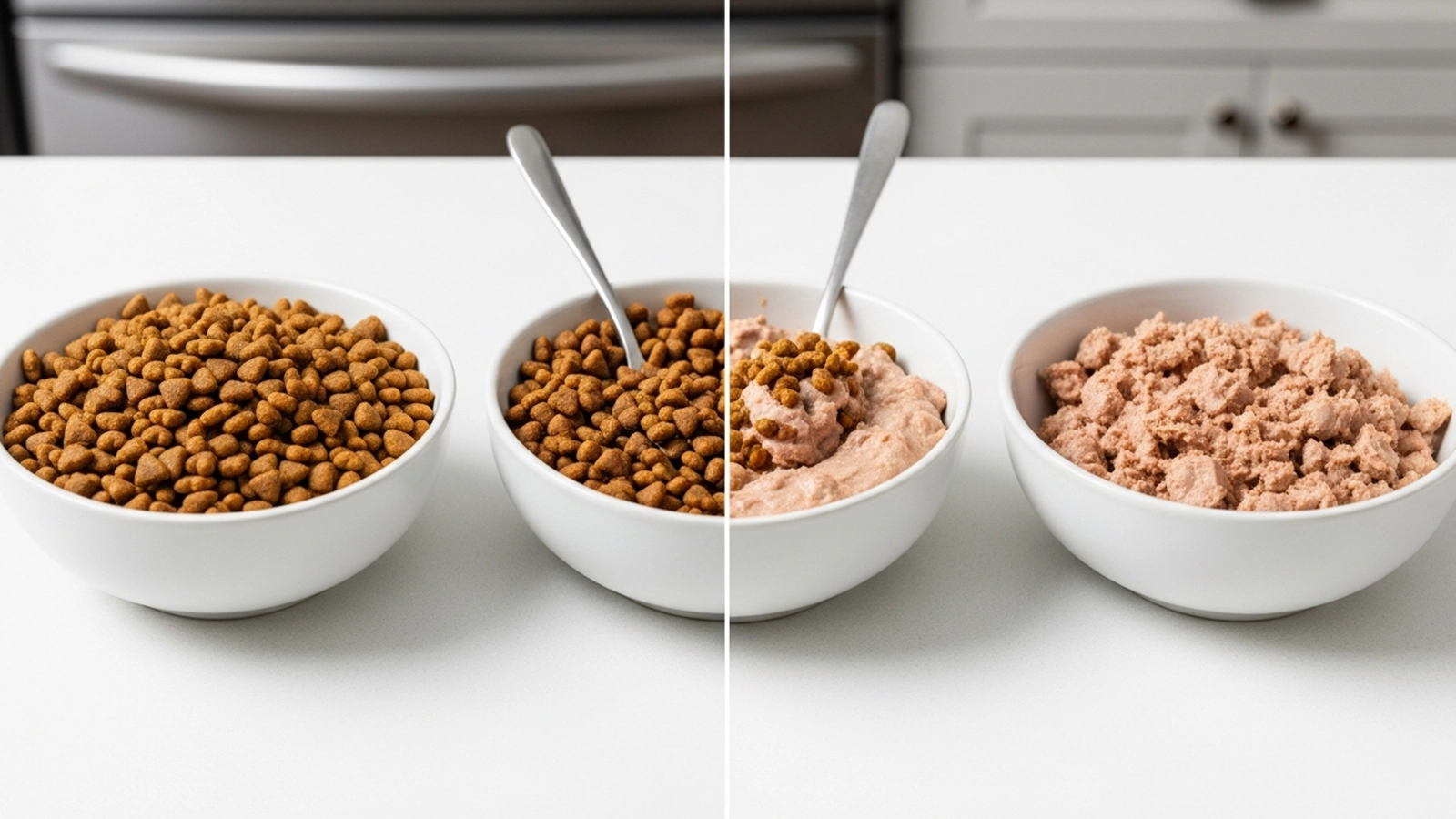
Transitioning Foods Without Stress 😺
Cats dislike sudden change.
Tips for smooth transitions:
-
Go slowly (7–14 days)
-
Mix increasing amounts gradually
-
Warm wet food slightly for aroma
-
Keep routines predictable
Patience prevents digestive upset and food refusal.
There Is No One “Perfect” Answer
The healthiest choice is the one that:
-
Meets nutritional needs
-
Supports hydration
-
Fits your household
-
Keeps your cat thriving long-term
Food is not just fuel—it’s preventive care.
Listening to your cat’s body, behavior, and preferences will always guide you better than trends or labels.
A Warm Final Thought 💛
Every cat is an individual.
Every household is different.
Some cats thrive on routine and simplicity, while others are more sensitive to texture, timing, and subtle dietary changes. Age, health history, environment, and even personality all shape how a cat responds to food over the long term. That’s why there is no single, universal answer to the wet versus dry debate—and why thoughtful observation matters more than rigid rules.
Choosing between wet and dry food isn’t about winning an argument or following trends. It’s about supporting a life you love, day after day, in ways that feel sustainable for both you and your cat. The healthiest feeding approach is one that respects feline biology, prioritizes hydration and quality nutrition, and fits naturally into your household rhythm without stress or guilt.
When meals are nourishing, satisfying, and chosen with care, they do more than meet basic nutritional needs. They support kidney and urinary health, help maintain a healthy weight, encourage emotional security, and reinforce the quiet trust that forms around daily routines. Over time, these small, consistent choices shape how comfortably a cat moves through each stage of life—from energetic adulthood to gentle senior years.
Perhaps most importantly, food is one of the most powerful ways we communicate care. The sound of a can opening, the familiar bowl placed on the floor, the calm presence at mealtime—these moments become anchors of safety and connection. When cats feel physically well and emotionally secure, their behavior reflects it: calmer nights, steadier energy, and a deeper sense of contentment.
In the end, the best choice isn’t defined by wet or dry alone. It’s defined by attention, balance, and a willingness to adapt as needs change. When feeding decisions are guided by understanding rather than habit, cats don’t just survive—they truly flourish, living longer, healthier, and happier lives alongside the people who care for them. 🐾✨