
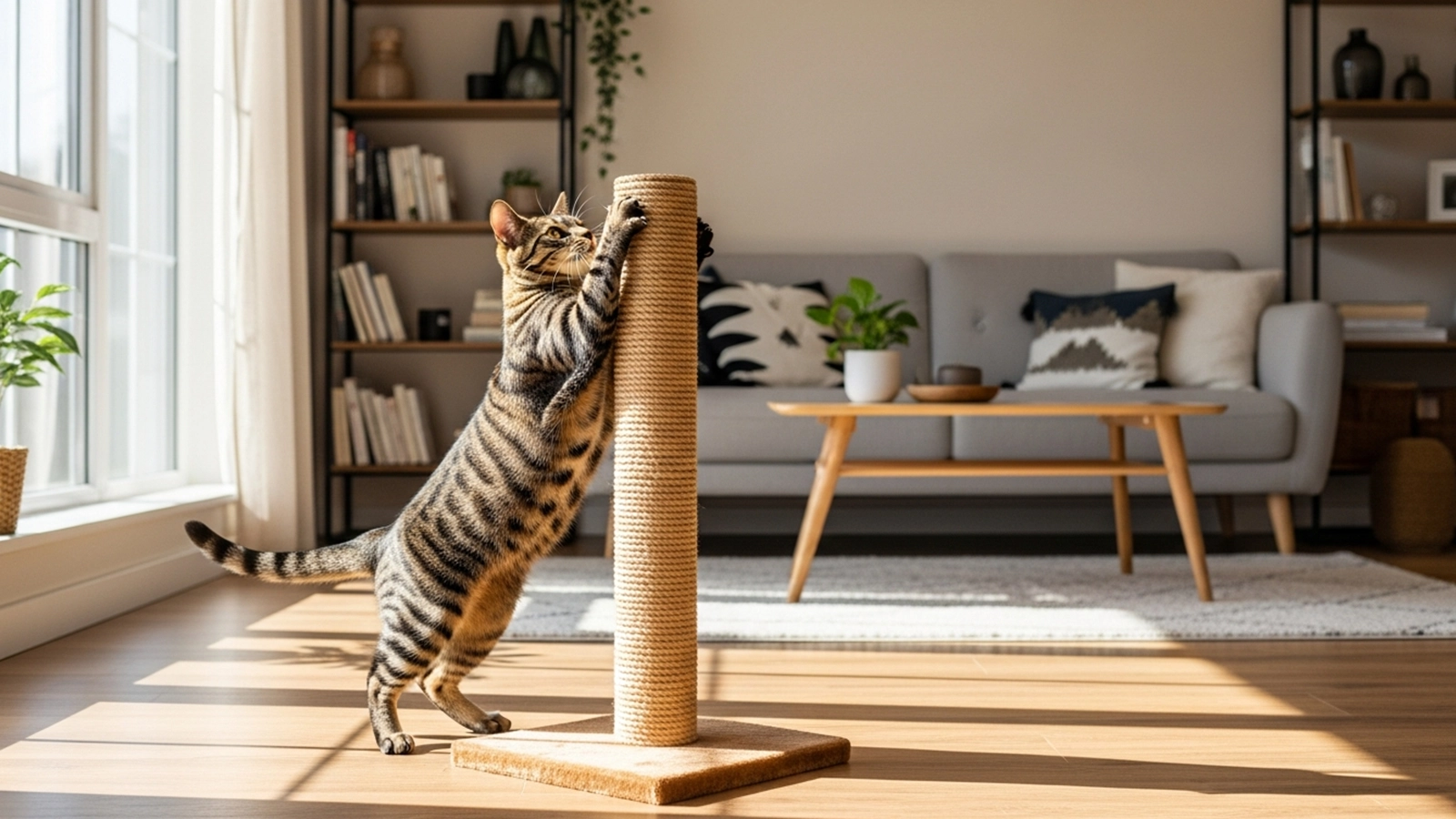
Scratching is a natural, necessary behavior that supports both a cat’s physical health and emotional stability. When it appears destructive, the issue is rarely the behavior itself but how the environment supports it.
Teaching a cat to use a scratching post works best when owners shift from correction to guidance. The goal is not to suppress scratching, but to give it a clear, satisfying outlet that fits naturally into daily routines.
When the right tools, placement, and timing align, scratching posts stop feeling like training devices. They become familiar landmarks that help cats feel secure, relaxed, and at home.
Why Scratching Is Non-Negotiable for Cats
Scratching fulfills multiple biological needs at the same time, which is why it is deeply ingrained and resistant to suppression. The motion allows cats to stretch their spine, shoulders, and forelimbs in a way that promotes circulation and joint flexibility. This full-body extension is especially important for indoor cats who may not climb or sprint as often as their outdoor counterparts. Removing or discouraging scratching without offering an alternative interferes with basic physical maintenance.
Beyond movement, scratching plays a key role in scent communication. Cats release pheromones from glands in their paws that mark territory in a subtle but meaningful way. These scent markers help cats feel oriented within their environment, particularly in shared homes with people or other pets. Scratching in visible locations reinforces a sense of familiarity and safety rather than dominance. When this outlet is missing, cats instinctively seek replacement surfaces.
Scratching also serves as an emotional regulator. During moments of excitement, stress, or transition, many cats scratch to discharge nervous energy. This explains why scratching often increases during household changes such as moving furniture, schedule disruptions, or the introduction of new animals. Understanding scratching as a stabilizing behavior reframes it from a problem into a signal that the environment needs better alignment.
How Cats Choose What to Scratch
Cats do not select scratching surfaces randomly, even when it appears that way to humans. They are drawn to materials that provide firm resistance under pressure, allowing claws to engage fully without slipping. Upholstered furniture often meets this requirement unintentionally, which is why it becomes such a common target. The texture, combined with stability, creates immediate physical feedback that feels rewarding.
Location heavily influences scratching choices. Cats prefer areas that are socially or emotionally significant, such as near sleeping spots or common walkways. Scratching in these places reinforces a sense of ownership and comfort rather than privacy. Posts hidden in unused corners may go untouched simply because they do not align with a cat’s spatial priorities.
Visual height and orientation also matter. Many cats favor vertical surfaces tall enough to support a complete stretch from shoulders to hind legs. Short or flimsy options interrupt this motion and quickly lose appeal. Recognizing these preferences helps owners choose tools that match instinct rather than expecting cats to adapt to human convenience.
Selecting a Scratching Post Your Cat Will Actually Use
A scratching post must first feel safe before it can feel satisfying. Stability is the single most important feature, as even slight wobbling can cause hesitation or avoidance. Cats commit their body weight during scratching, and instability breaks trust instantly. Once a post feels unreliable, many cats will permanently reject it.
Material choice influences long-term engagement. Sisal rope or tightly woven sisal fabric offers the right balance of grip and resistance for most cats. Overly soft carpet may feel unsatisfying, while slick surfaces fail to provide enough claw feedback. Some cats enjoy cardboard scratchers, but these tend to work best as secondary options rather than primary posts.
Height should never be underestimated. A post should be tall enough to allow a full upward stretch without forcing the cat to crouch or compromise posture. For most adult cats, this means taller than commonly expected. Investing in a properly sized post reduces frustration and makes correct scratching feel effortless rather than trained.
Where to Place the Scratching Post for Maximum Success
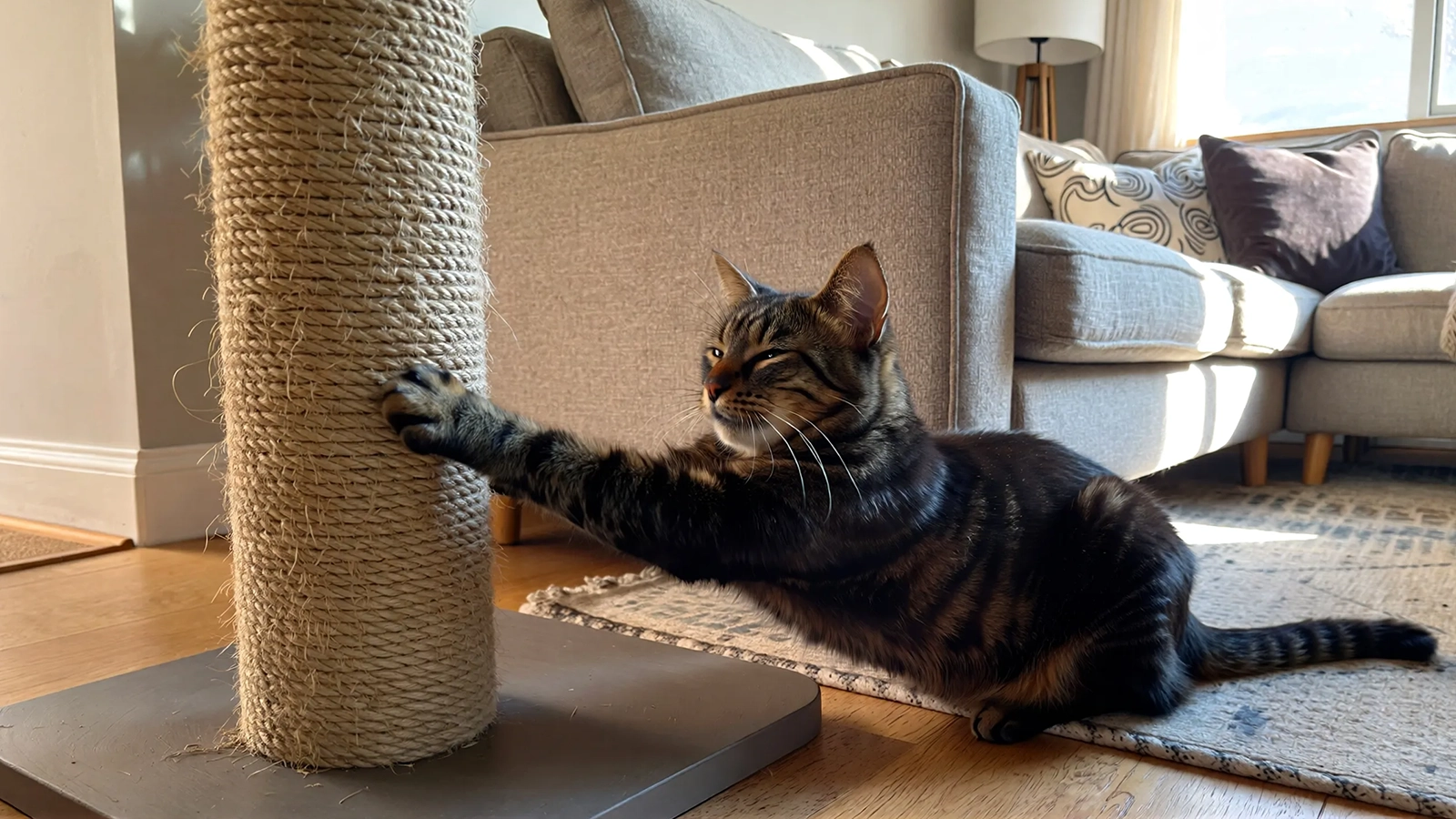
Placement determines whether a scratching post becomes part of daily life or remains ignored. Cats are most likely to scratch in areas that already matter to them, such as near resting spots or frequently traveled paths. Positioning a post close to furniture that has been scratched before often redirects behavior more effectively than moving the post elsewhere. This approach works with instinct instead of against it.
Morning and post-nap moments are peak scratching times. Placing a post near sleeping areas allows scratching to become part of a natural wake-up ritual. Over time, this repetition builds habit without any formal training. The convenience of location plays a larger role than novelty or appearance.
Environmental consistency is equally important. Frequently relocating a post can interrupt habit formation and create uncertainty. Once a cat begins using a post, keeping it in the same location reinforces predictability and confidence. This stability supports broader emotional balance within the home, as cats rely heavily on environmental cues to feel secure. A deeper understanding of how physical surroundings quietly shape feline confidence can be found in thoughtful discussions about the unseen structures that support a cat’s overall well-being.
Introducing the Post Without Creating Resistance
Initial exposure should always be pressure-free. Cats form strong associations, and forcing interaction can link the post with stress rather than comfort. Simply placing the post in a meaningful location and allowing voluntary exploration creates a foundation of trust. Curiosity, not compliance, drives successful adoption.
Scent familiarity can accelerate acceptance. Transferring a cat’s own scent onto the post using a soft cloth can make it feel recognizable. Some cats respond positively to catnip, while others ignore it, so its use should be guided by individual response rather than expectation. The goal is familiarity, not excitement.
Avoid physically guiding a cat’s paws onto the post. While well-intentioned, this often triggers resistance or avoidance, particularly in sensitive cats. Instead, calm verbal reinforcement when the cat investigates on its own helps form a positive association. Training progresses faster when the cat feels in control of the interaction.
Building Long-Term Habits Through Consistency
Habit formation depends on repetition within predictable routines. Observing when a cat naturally wants to scratch allows owners to reinforce correct behavior at the right moment. Gentle praise immediately after post use strengthens the connection without overwhelming the cat. Timing matters far more than the size of any reward.
Consistency reduces the need for correction. When a scratching post reliably meets physical and emotional needs, furniture scratching often fades without confrontation. Over time, scratching becomes self-reinforcing because it feels good and familiar. This transition marks true success rather than temporary compliance.
Patience is essential during this stage. Some cats adopt posts within days, while others take weeks to fully commit. Progress should be measured by increasing frequency and confidence, not instant elimination of unwanted scratching. Long-term success comes from alignment, not speed.
Using Environmental Cues to Encourage Proper Scratching
Cats respond strongly to subtle environmental signals, often more than to direct training attempts. Lighting, proximity to activity, and even airflow can influence whether a scratching post feels inviting or irrelevant. A post placed in a well-lit area where the cat already pauses or stretches will receive more attention than one tucked into a visually dull space. Cats rely on visual comfort to assess safety, and brighter, open areas tend to feel more secure.
Sound and movement also play a role. Scratching near areas with gentle household activity allows cats to remain socially connected while engaging in the behavior. This connection matters because scratching is not a private act; it is a visible declaration of comfort and presence. When posts are placed in isolation, cats may prefer furniture simply because it keeps them within the household’s emotional flow. Aligning scratching opportunities with these cues helps the behavior feel natural rather than trained.
Temperature and surface stability should not be overlooked. Drafty hallways or slick floors can discourage use, even if the post itself is ideal. Ensuring the base sits firmly on a non-slip surface improves confidence and follow-through. These environmental refinements often produce noticeable improvements without changing the post itself.
Redirecting Furniture Scratching Without Stress
Redirecting scratching behavior requires restraint more than intervention. When a cat scratches furniture, the immediate instinct is often to stop the action, but abrupt interruption can heighten anxiety. Calm redirection works better when the scratching post is already nearby and visually obvious. The goal is to shift momentum, not to punish the attempt.
Covering targeted furniture temporarily can reduce reinforcement while habits change. Textures cats dislike, such as smooth covers or protective panels, remove the tactile reward without introducing fear. This creates a neutral pause that encourages exploration of the post instead. Over time, the furniture loses its appeal simply because it no longer delivers satisfaction.
Timing remains critical. Redirecting works best when the cat is caught early in the scratching motion, not after it finishes. Gentle guidance paired with consistent post availability teaches preference rather than avoidance. Stress-free redirection preserves trust and supports long-term learning.
Leveraging Play to Strengthen Scratching Habits
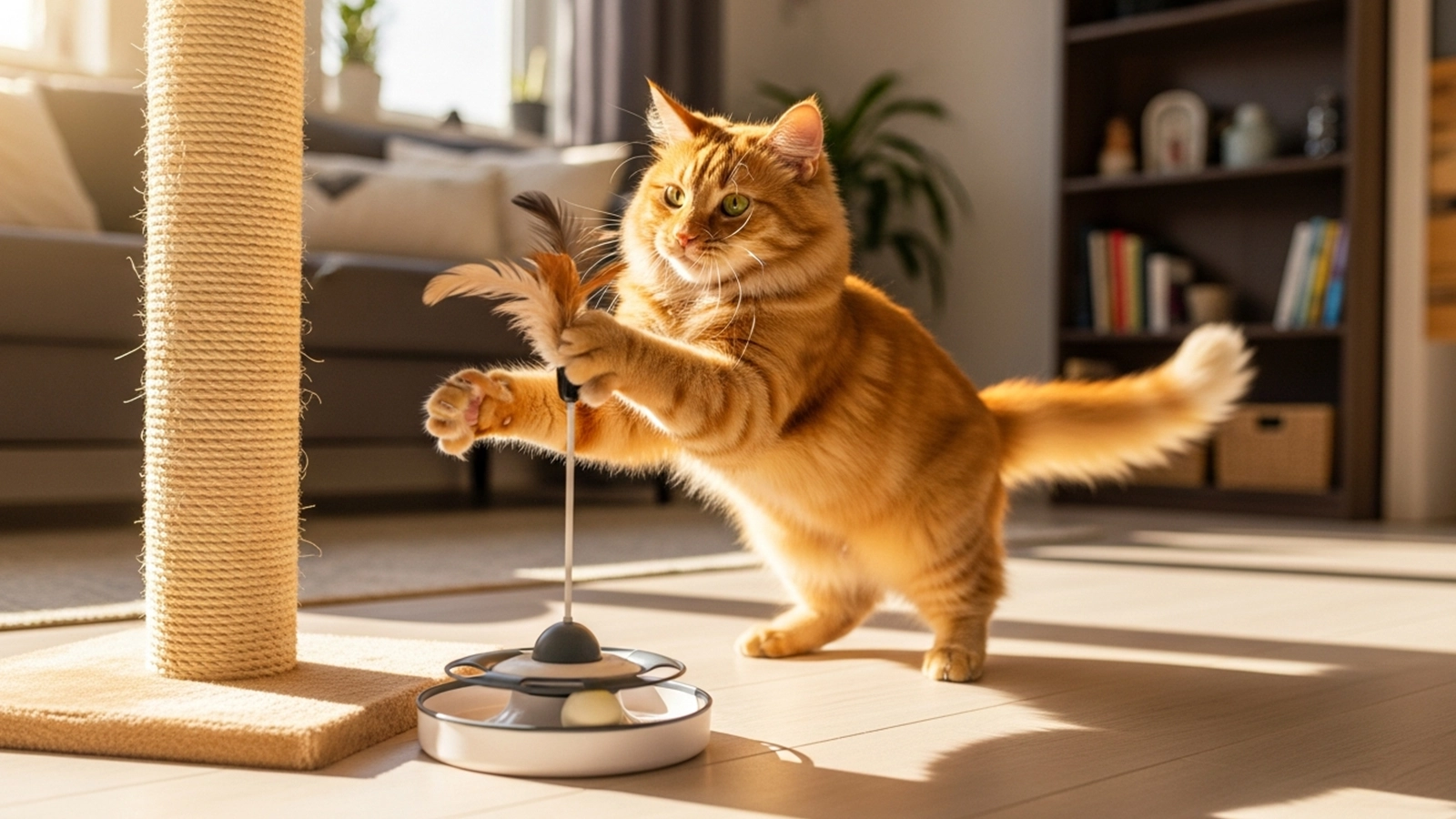
Play and scratching are naturally linked through shared muscle activation and excitement. After bursts of movement, cats instinctively stretch and scratch to release tension. Placing interactive toys near scratching posts takes advantage of this transition, encouraging use without direct prompting. The post becomes part of the play cycle rather than a separate object.
Structured play sessions also reduce frustration-driven scratching. Cats with unmet mental or physical needs may scratch excessively or destructively as an outlet. When play satisfies these needs, scratching becomes more focused and intentional. This balance is particularly important for indoor cats with limited environmental variety.
Routine play further reinforces consistency. When scratching follows predictable play times, it integrates into the cat’s internal schedule. Over time, the scratching post becomes associated with positive energy release rather than correction. Thoughtfully designed play routines can significantly reduce unwanted behaviors by supporting mental engagement and emotional balance in indoor cats.
Supporting Older or Hesitant Cats
Age, past experiences, and physical limitations can affect how cats interact with scratching posts. Older cats may struggle with tall or rigid posts if joint stiffness limits full extension. In these cases, offering a mix of vertical and slightly angled options provides flexibility without eliminating the stretch benefit. Comfort should guide design choices rather than rigid standards.
Cats with negative past experiences may approach new posts cautiously. Allowing extended adjustment time helps rebuild confidence. These cats often benefit from quieter placements where observation can occur without pressure. Progress may appear slow, but gradual acceptance often leads to more reliable long-term use.
Health changes should also be considered. Sudden avoidance of scratching posts can signal discomfort rather than behavioral resistance. Monitoring posture, grip strength, and engagement level helps distinguish training issues from physical concerns. Supporting comfort ensures scratching remains beneficial rather than burdensome.
Maintaining Progress Through Household Consistency
Consistency across all household members is essential. Mixed signals, such as one person allowing furniture scratching while another discourages it, confuse learning. Clear, unified responses help cats form stable expectations. Consistency builds trust, which directly influences willingness to adapt.
Environmental changes should be introduced carefully. Rearranging furniture or relocating posts too often can reset progress by disrupting established patterns. When changes are necessary, maintaining at least one familiar scratching location preserves continuity. Predictability reinforces emotional safety and reduces regression.
Cleaning routines also matter. Removing scent markers from posts can unintentionally reduce their appeal. While cleanliness is important, preserving some familiar scent helps maintain attraction. Balancing hygiene with familiarity supports sustained use.
Recognizing When Scratching Signals a Deeper Issue
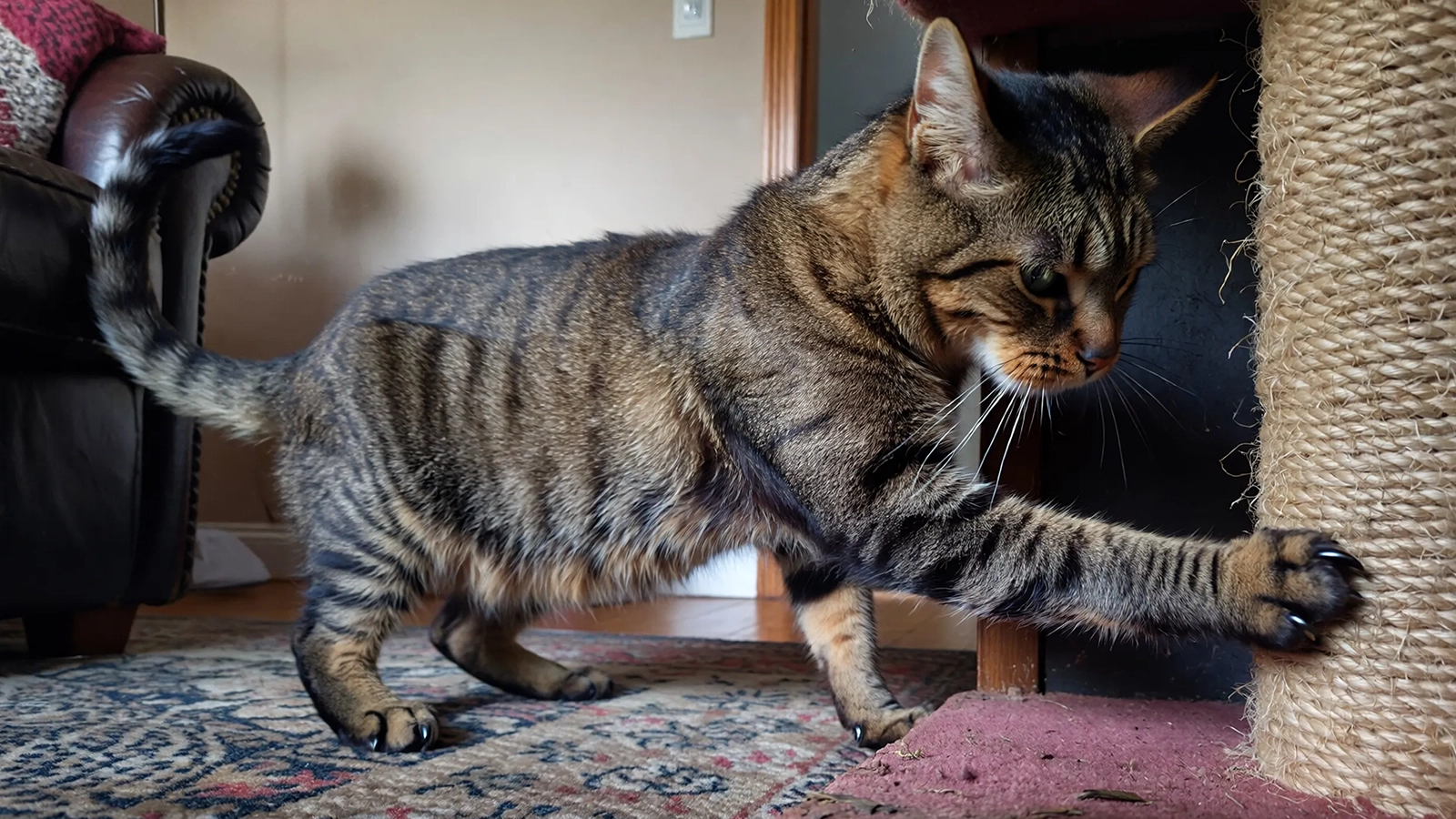
Excessive or frantic scratching can indicate emotional strain rather than training failure. When scratching becomes intense, frequent, or paired with other behavior changes, it may reflect underlying stress. These patterns often emerge alongside changes in appetite, sleep, or social tolerance. Viewing scratching as communication helps owners respond appropriately.
Environmental stressors are common triggers. New pets, noise, or unpredictable routines can elevate marking behavior. In these cases, adding more scratching options rather than restricting access often reduces pressure. The goal is to provide outlets that restore balance rather than enforce control.
Recognizing behavioral context prevents misinterpretation. Scratching that escalates alongside irritability or defensiveness deserves closer attention. Addressing the emotional cause restores scratching to its natural role as comfort behavior rather than symptom.
Fine-Tuning Scratching Behavior Through Observation
Observation is the final and often overlooked layer of successful scratching training. Once a cat is consistently using appropriate surfaces, subtle patterns begin to emerge that reveal preferences and limits. Some cats scratch more intensely at certain times of day, while others alternate between vertical and horizontal surfaces depending on mood or energy level. Noticing these patterns allows owners to adjust placement or variety without reintroducing confusion.
Body language offers valuable feedback. Relaxed ears, steady pressure, and slow stretching indicate satisfaction, while rushed or tense scratching may signal unresolved stress. These cues help distinguish healthy habit from emotional discharge. Scratching should look purposeful and calm, not frantic or defensive. Refinement happens when owners respond to these nuances rather than treating scratching as a static behavior.
Long-term success depends on flexibility. As a cat ages or as household dynamics change, scratching needs may evolve. Being responsive rather than rigid prevents setbacks and keeps the behavior aligned with comfort. Observation turns scratching management into an ongoing conversation instead of a one-time fix.
Adjusting for Multi-Cat Households
Scratching dynamics change significantly in homes with more than one cat. Posts are no longer just personal tools but shared resources that can influence social balance. Competition over scratching spaces can lead to avoidance, tension, or over-marking. Providing multiple posts in different locations reduces pressure and allows each cat to establish comfort zones.
Placement becomes even more strategic in these environments. Posts should be distributed so that no single cat can control access. Visual separation matters, as some cats prefer scratching without being watched by others. Creating options at different heights and orientations supports individual preference and reduces conflict.
Scent layering is another consideration. While shared scent can promote group cohesion, excessive overlap may trigger insecurity in more sensitive cats. Cleaning posts lightly rather than stripping scent entirely preserves familiarity without erasing individual markers. Balanced access supports harmony and prevents scratching from becoming a social stressor.
Preventing Regression During Environmental Changes
Environmental changes are one of the most common causes of scratching regression. Moves, renovations, new furniture, or schedule shifts disrupt familiar scent and spatial cues. During these transitions, scratching often increases as cats attempt to re-anchor themselves. Anticipating this response helps owners manage it proactively.
Maintaining at least one unchanged scratching location provides continuity. This familiar anchor helps cats navigate broader changes without resorting to destructive alternatives. Adding temporary posts during high-stress periods can also distribute marking behavior more evenly. Extra options reduce the urge to target furniture.
Reinforcement may need to be briefly reintroduced during transitions. Calm praise or gentle encouragement reminds cats that appropriate outlets still exist. Once the environment stabilizes, most cats naturally return to established habits. Regression is not failure but a sign that reassurance is needed.
When Scratching Training Plateaus
Plateaus can occur even when everything appears to be done correctly. A cat may use the post inconsistently or revert to old habits without obvious cause. In many cases, this reflects subtle dissatisfaction rather than defiance. Reassessing stability, height, or texture often reveals small mismatches that have become more noticeable over time.
Boredom can also contribute. Cats are sensitive to environmental stagnation, and scratching posts may lose appeal if nothing else changes around them. Rotating secondary scratchers or adjusting nearby enrichment can renew interest without replacing the main post. Novelty works best when applied selectively.
Patience is critical during plateaus. Abrupt changes or increased intervention can add pressure and prolong resistance. Gradual adjustments paired with observation usually restore progress. Plateaus signal the need for refinement, not escalation.
Recognizing Behavioral Red Flags Early
Scratching sometimes shifts from habit to signal, and recognizing this transition early prevents larger issues. Sudden changes in intensity, location, or frequency may reflect emotional overload rather than training gaps. These shifts often appear alongside increased vigilance, irritability, or withdrawal. Scratching becomes louder, faster, or more forceful as tension rises.
Environmental triggers are frequently involved. Crowded spaces, unpredictable noise, or reduced access to preferred areas can amplify marking behavior. In these cases, simply adding more posts may not resolve the root cause. Addressing stressors restores scratching to its natural role.
Understanding how scratching fits into a broader behavioral picture helps owners respond appropriately. Patterns of escalating scratching combined with defensiveness or irritability often align with deeper stress responses that are explored in discussions about why cats suddenly display aggressive behavior. Early awareness allows for timely adjustments that protect both the environment and the cat’s emotional health.
Supporting Scratching as Lifelong Self-Care
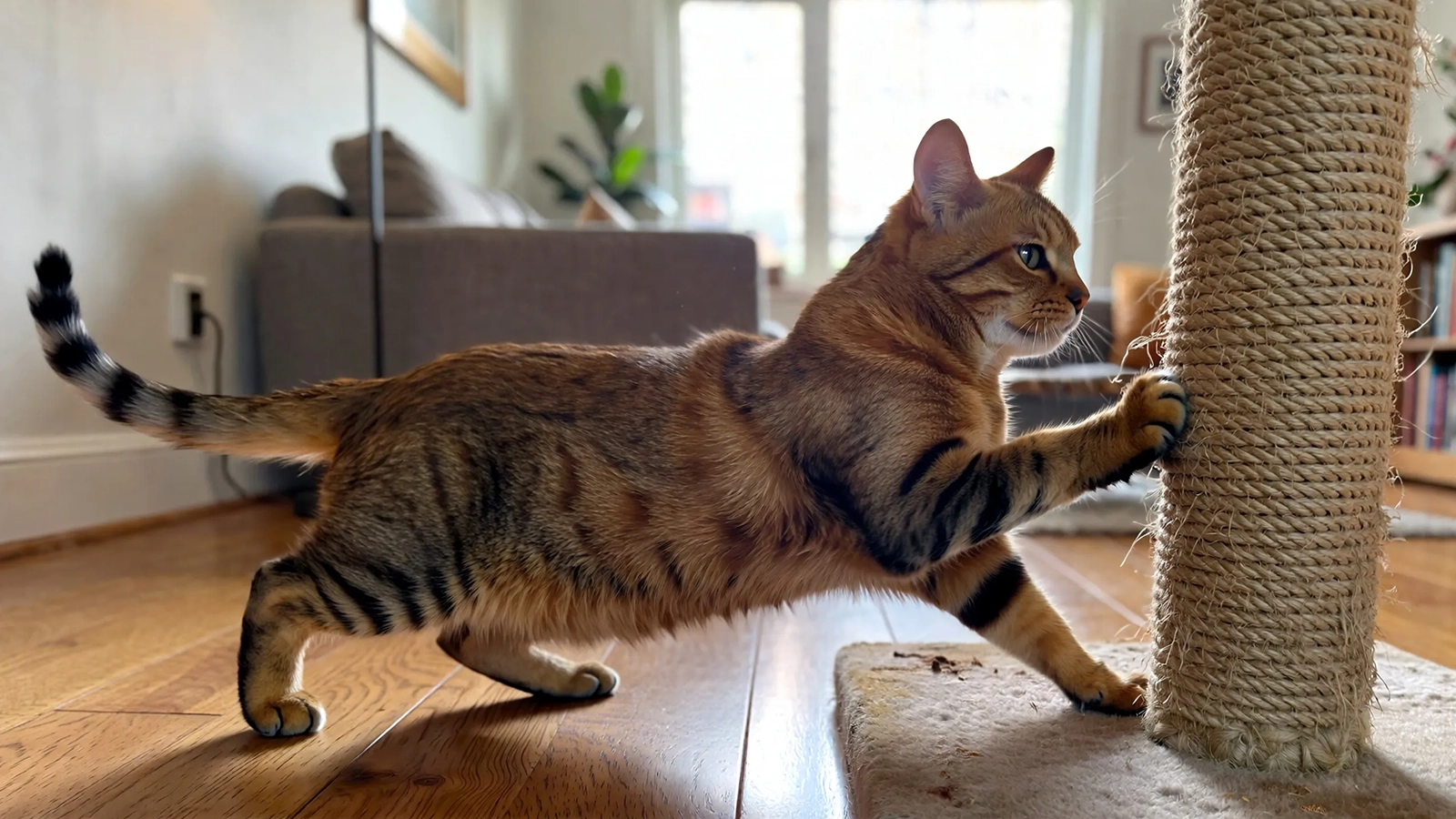
Scratching should be viewed as a form of lifelong self-maintenance rather than a behavior to outgrow. From kittenhood through senior years, the act supports muscle tone, flexibility, and emotional regulation. As physical abilities change, scratching setups should adapt accordingly. Lower angles, softer resistance, or additional supports may become necessary over time.
Consistency reinforces security. When scratching options remain reliable, cats are less likely to develop anxiety-driven habits. Scratching becomes a grounding ritual that helps regulate transitions throughout the day. This reliability contributes to overall well-being beyond claw care.
Ultimately, successful scratching training reflects alignment rather than control. When environment, routine, and emotional safety work together, scratching posts stop being tools and start being trusted fixtures. Supporting this behavior throughout a cat’s life strengthens both physical comfort and the human-animal bond.
External source:https://www.purina.com.au/train-your-cat-how-to-use-a-scratching-post.html