
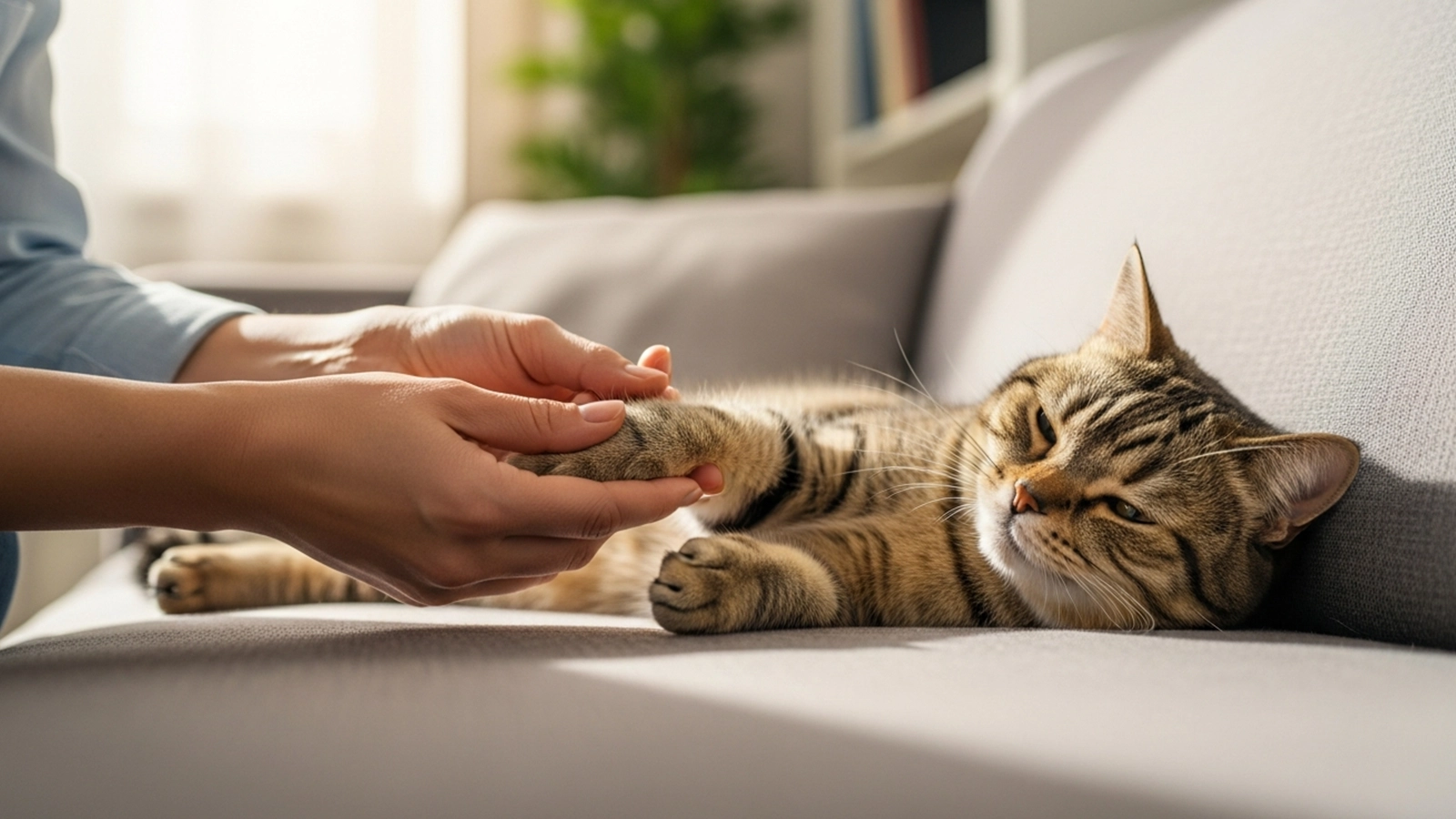
Small cuts, scrapes, and surface wounds are an almost inevitable part of a cat’s life.
Even strictly indoor cats manage to nick themselves on sharp furniture edges, catch a claw during energetic play, or overgroom a spot until the skin becomes irritated. Outdoor cats, of course, face even more opportunities for minor injuries through climbing, rough surfaces, or brief territorial scuffles.
The reassuring truth is that not every wound requires a rushed trip to the veterinarian.
The more important truth is knowing which wounds can be safely handled at home—and how to do so without increasing pain, infection risk, or emotional stress. 🐾
Treating a minor wound at home isn’t about replacing professional care.
It’s about informed observation, calm handling, and supporting your cat’s natural healing process in a way that protects both physical health and emotional trust.
Before any cleaning or care begins, it’s essential to understand what truly qualifies as “minor.”
What Is Considered a Minor Cat Wound?
A wound is generally considered minor when it affects only the outer layers of skin and shows no signs of deeper tissue damage or infection.
Common examples include:
-
Small superficial scratches
-
Shallow cuts with minimal bleeding
-
Tiny scabs with mild redness
-
Torn or cracked nails without swelling
-
Skin irritation from overgrooming
These injuries typically heal well with gentle care and monitoring.
However, certain wounds should never be treated at home, even if they appear small at first glance.
Do not attempt home treatment if you notice:
-
Deep puncture wounds (especially from bites)
-
Rapid swelling or heat around the area
-
Thick discharge, pus, or a foul odor
-
Ongoing bleeding that doesn’t stop
-
Sudden lethargy or appetite loss
-
Aggression triggered by pain
Cats instinctively hide discomfort, which makes early recognition critical.
Many owners learn to separate harmless scrapes from more serious problems by recognizing subtle physical and behavioral changes that often serve as the earliest warning signs of illness or injury.
When there is any uncertainty, contacting a veterinarian is always the safer choice.
Preparing Yourself Before Touching the Wound
One of the most overlooked aspects of wound care is the caregiver’s emotional state.
Cats are extraordinarily sensitive to human tension.
If you approach a wound feeling rushed, anxious, or frustrated, your cat will detect it immediately—and may react defensively.
Before you begin:
✔️ Choose a quiet, well-lit room
✔️ Wash your hands thoroughly
✔️ Gather supplies within arm’s reach
✔️ Speak softly and move slowly
Helpful items to prepare:
-
Clean towels or soft cloths
-
Sterile gauze pads
-
Saline solution or clean lukewarm water
-
Cat-safe antiseptic (only if vet-approved)
-
A few favorite treats for reassurance ⭐
Avoid hydrogen peroxide, alcohol, iodine, or human antibiotic ointments unless specifically directed by a veterinarian. These substances often delay healing and can damage delicate feline skin.
Calm preparation reduces resistance and lowers the risk of scratches—intentional or accidental.
How to Safely Examine a Minor Wound
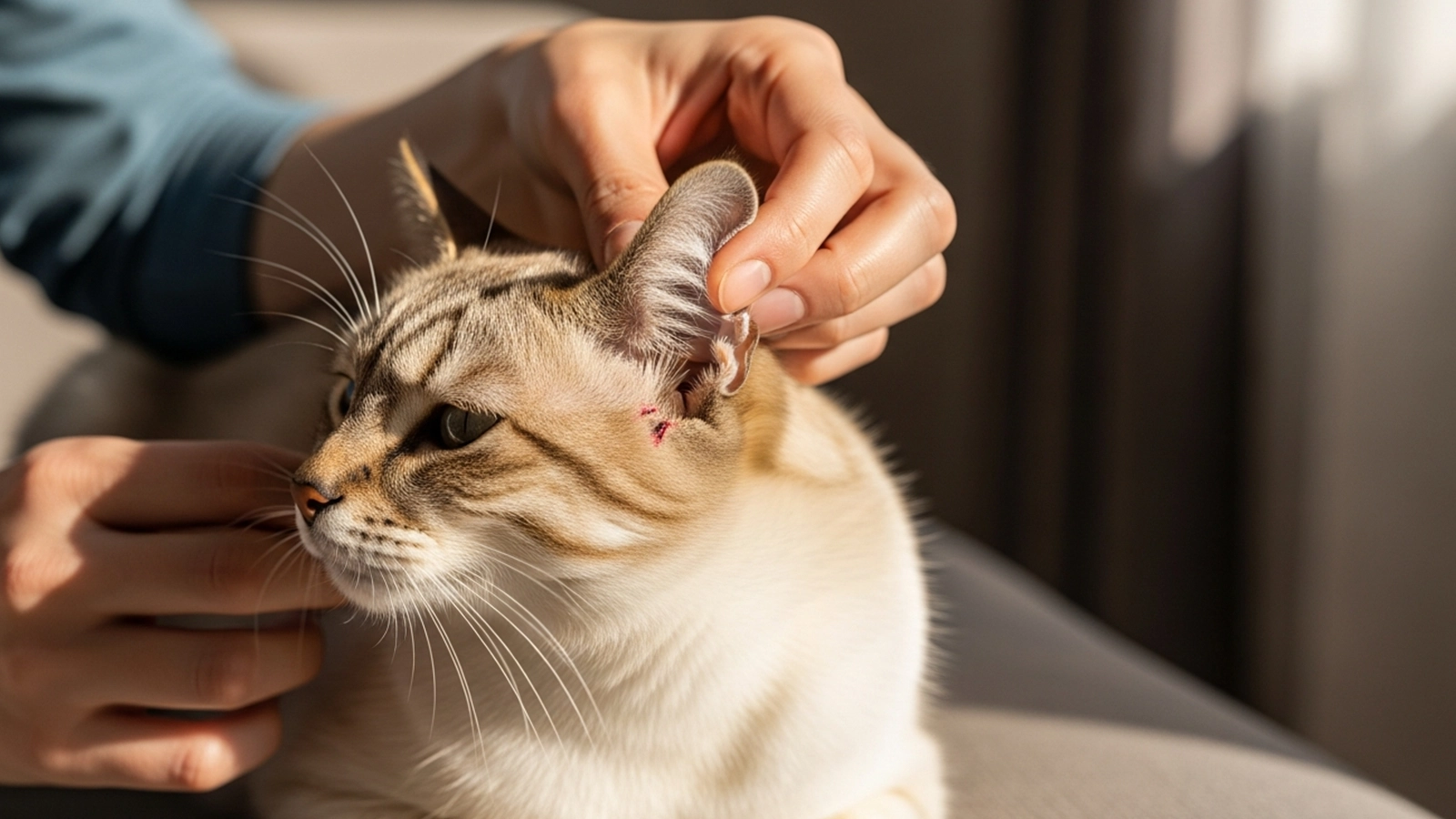
Most cats dislike restraint, especially when they’re uncomfortable.
Instead of forcing your cat to stay still, aim for cooperation rather than control.
Begin with observation before touching:
-
Is your cat limping or favoring one side?
-
Is there excessive licking or chewing?
-
Do you notice fur clumping, redness, or swelling?
When examining the wound:
-
Use minimal pressure
-
Gently part the fur with your fingers
-
Avoid pulling at scabs or dried blood
-
Stop immediately if your cat becomes tense
Short, calm inspections are far more effective than one prolonged struggle.
💡 Tip: Lightly wrapping your cat in a towel—often called a “kitty burrito”—can provide a sense of security while limiting sudden movements.
Cleaning a Minor Cat Wound Safely
Cleaning is the most important step in at-home wound care—and also the easiest to overdo.
The goal is simple:
remove surface debris without damaging healing tissue.
Follow this method:
-
Gently rinse the area with saline or clean water
-
Dab dry using sterile gauze (never rub)
-
Trim surrounding fur only if absolutely necessary
-
Allow the wound to air briefly before covering or leaving open
Do not scrub.
Do not reopen scabs.
Do not apply thick ointments unless advised.
A healthy wound should appear light pink, not inflamed or dark red.
Mild sensitivity is normal; sharp pain is not.
Should the Wound Be Covered or Left Open?
The decision depends on location and your cat’s behavior.
Leave the wound uncovered when:
-
It is small and dry
-
Your cat ignores it
-
It’s not exposed to friction or dirt
Consider light protection if:
-
The wound is on a paw or joint
-
Persistent licking occurs
-
The area contacts litter or rough surfaces
Elizabethan collars can be helpful short-term, but overuse often increases stress and slows recovery.
Observation matters more than restriction.
Monitoring the First 48 Hours
The first two days after injury reveal how well healing is progressing.
Healthy signs include:
✔️ Reduced redness
✔️ Dry scab formation
✔️ Less licking or chewing
✔️ Normal appetite and activity
Warning signs that require veterinary advice:
-
Worsening swelling
-
Heat around the wound
-
Any discharge
-
Sudden behavior changes
Cats rarely vocalize pain.
Instead, discomfort often shows up as hiding, irritability, or restlessness.
Minor wound care isn’t about perfection.
It’s about awareness, patience, and responding to small changes before they become bigger problems.
As healing continues, emotional factors—stress levels, nighttime behavior, and environmental comfort—begin to play an even greater role in whether recovery stays on track. That’s where many seemingly minor wounds reveal deeper patterns that deserve closer attention.
As the initial cleaning phase ends and the wound begins to close, many owners assume the most delicate part is over.
In reality, this is when healing becomes more complex.
At this stage, the body is repairing tissue, nerve endings are reawakening, and the skin often feels tight, itchy, or unfamiliar to your cat. Even when a wound looks small and clean, discomfort can quietly persist—and that’s when behavior starts to change.
Understanding what’s happening during this middle phase is essential for preventing setbacks.
Why Cats Lick, Chew, or Reopen Healing Wounds
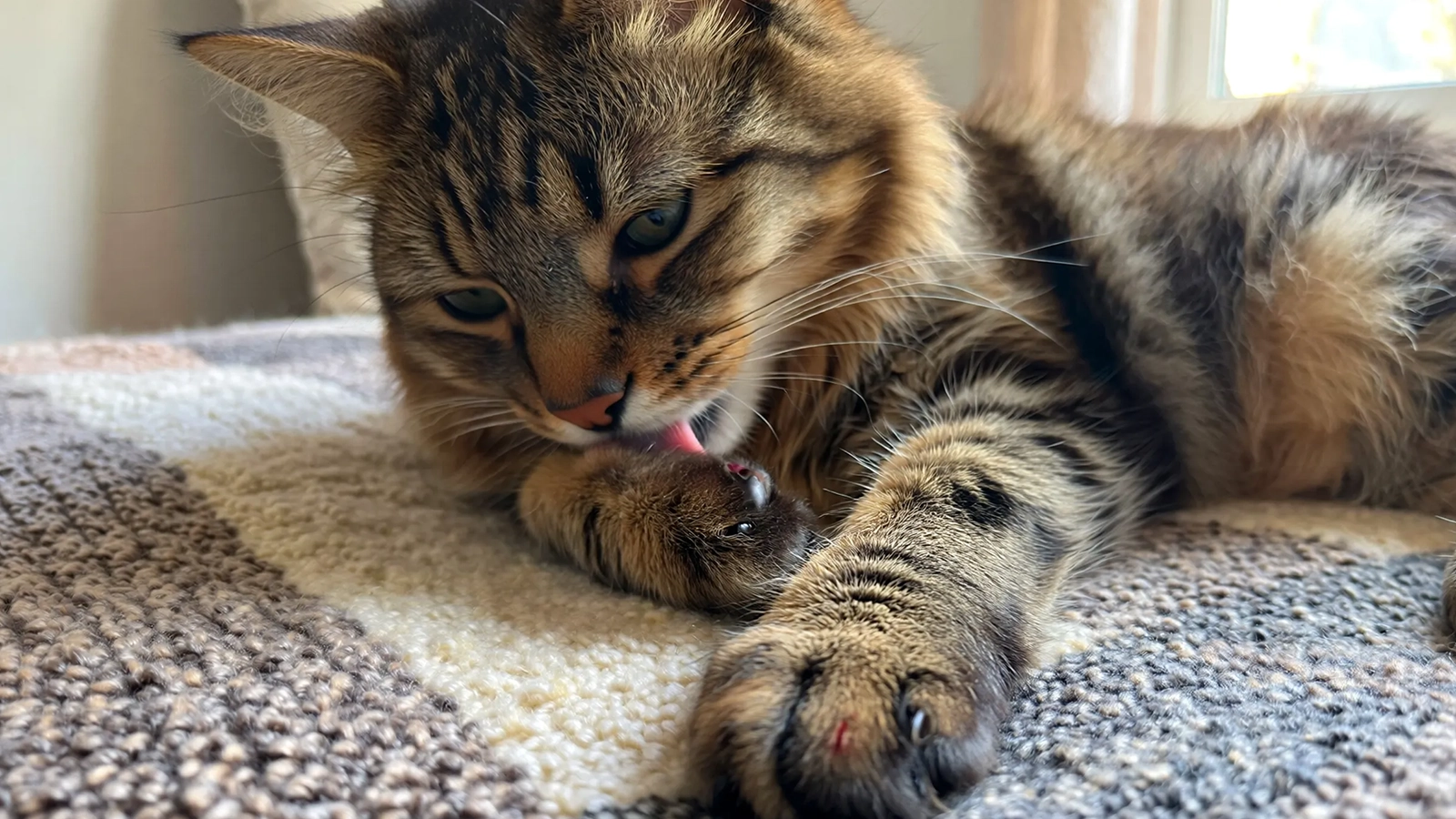
Licking is a natural feline instinct.
In moderation, it helps keep wounds clean. But repeated licking, chewing, or nibbling can quickly undo progress by removing new tissue and introducing bacteria from the mouth.
Common reasons cats interfere with healing include:
-
Persistent low-level pain
-
Itching as new skin forms
-
Stress from environmental changes
-
Boredom during reduced activity
-
Emotional insecurity after handling
This behavior often intensifies in the evening or overnight, when stimulation drops and physical sensations become more noticeable.
When licking becomes repetitive or frantic, it’s not misbehavior—it’s communication.
When a Wound Looks Fine but Healing Has Stalled
Not all problematic wounds look dramatic.
Some simply stop improving.
Signs of stalled healing include:
-
A scab that repeatedly forms and falls off
-
Redness that fades and returns
-
Fur that doesn’t regrow around the area
-
Skin that appears shiny or thickened
-
Your cat revisiting the same spot daily
These patterns often point to low-grade inflammation or stress-related immune suppression rather than infection.
Healing requires both physical resources and emotional safety.
Protecting the Wound Without Increasing Stress
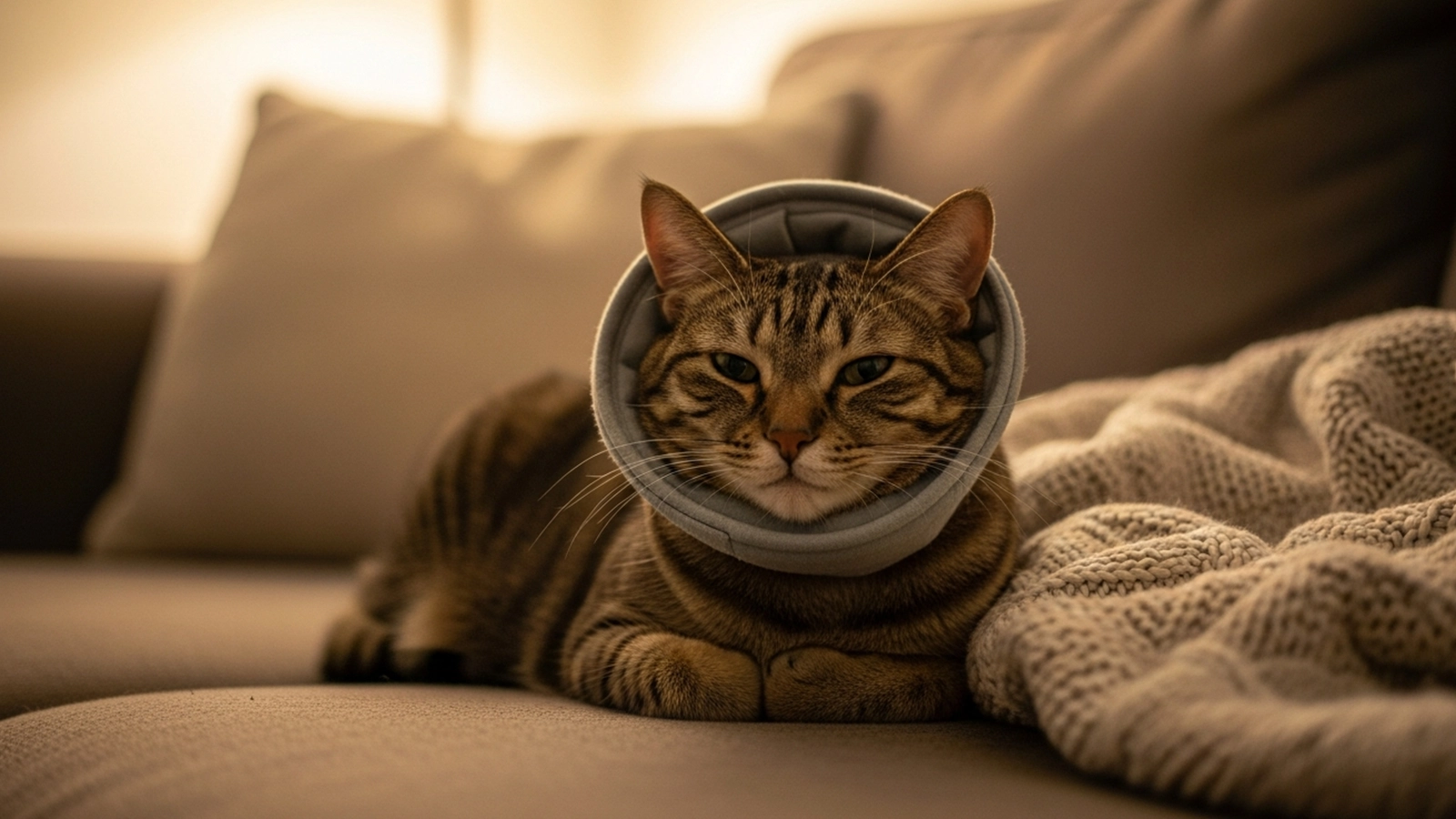
Sometimes, physical protection is necessary—but how it’s done matters.
Gentler options include:
-
Soft fabric recovery collars
-
Short-term paw wraps (with supervision)
-
Lightweight protective garments for body wounds
Key rules to follow:
✔️ Always supervise at first
✔️ Remove barriers during meals if safe
✔️ Never leave restrictive coverings on an anxious cat
✔️ Watch closely for signs of frustration or shutdown
If your cat freezes, hides excessively, or stops eating, the solution may not be better restraint—it may be reduced stimulation.
How Stress Directly Slows Physical Healing
Stress isn’t just emotional.
It’s physiological.
Elevated stress hormones like cortisol interfere with:
-
Inflammation control
-
Tissue regeneration
-
Immune response
-
Pain tolerance
Even small stressors can matter:
-
Loud voices
-
Rearranged furniture
-
Visitors
-
Conflicts with other pets
-
Repeated wound checks
Simple changes make a difference:
-
Keep routines consistent
-
Reduce noise and foot traffic
-
Avoid hovering or frequent handling
-
Provide quiet, low-light resting spots 🌙
When the nervous system relaxes, the body heals more efficiently.
Nutrition and Hydration During Recovery
Skin repair requires fuel.
Cats healing from wounds benefit from:
-
High-quality animal protein
-
Stable feeding schedules
-
Adequate hydration
-
Familiar foods (avoid sudden changes)
Watch for subtle warning signs:
-
Reduced appetite
-
Slower eating
-
Dropping food
-
Avoiding water bowls
Even mild dehydration can delay healing.
Encouraging moisture intake through wet food or fresh water sources often shows benefits within days.
Cleaning Less as Healing Improves
Once a wound is clean and stable, over-cleaning becomes counterproductive.
Too much intervention can:
-
Remove protective oils
-
Delay scab formation
-
Increase sensitivity
-
Cause defensive reactions
A balanced approach works best:
-
Clean once daily for the first 1–2 days
-
Then shift to observation unless debris appears
Healing tissue needs protection—not constant disruption.
Behavioral Changes That Appear Mid-Recovery
Some cats change noticeably during healing.
You may see:
-
Increased hiding
-
Irritability
-
Reduced tolerance for touch
-
Guarding specific areas
-
Heightened startle responses
These reactions don’t mean your cat is “being difficult.”
They often reflect pain memory and vulnerability.
Respecting these signals prevents long-term sensitivity.
Supporting Emotional Recovery Alongside Physical Healing
Trust isn’t rebuilt through force.
It’s restored through predictability and choice.
Helpful strategies include:
-
Sitting nearby without touching
-
Offering treats after inspections
-
Maintaining normal routines
-
Letting your cat initiate contact ✔️
Soft voices, slow movements, and patience matter more than technique.
Preventing Repeat Injuries During the Healing Window
Cats often move differently while healing.
Reduce risk by:
-
Blocking high jumps temporarily
-
Adding steps to favorite perches
-
Covering sharp edges
-
Supervising interactions with other pets
Short-term adjustments prevent long-term setbacks.
By this stage, most minor wounds are no longer about cleaning or covering.
They’re about balance—between protection and freedom, observation and restraint, care and respect.
As the skin strengthens, the emotional layer of healing becomes increasingly important. How you handle touch, grooming, and closeness next will determine whether recovery ends smoothly or leaves lingering sensitivity.
As the wound closes and the skin begins to strengthen, many cats appear physically “back to normal.”
But emotionally, this stage is often the most delicate.
Cats remember how vulnerable they felt—how it felt to be restrained, examined, or uncomfortable in their own body. Even when fur regrows and scabs disappear, the experience itself can linger quietly beneath the surface.
This final phase isn’t about medical care anymore.
It’s about trust, communication, and helping your cat fully relax back into daily life.
Reading Subtle Signals After the Wound Has Healed
A healed wound doesn’t always mean a healed experience.
You may notice:
-
Avoidance of touch in a specific area
-
Flinching during routine handling
-
Increased sensitivity during grooming
-
More frequent reassurance-seeking
-
Defensive reactions to sudden movements
These behaviors are not defiance or personality changes.
They’re protective responses rooted in memory.
Cats don’t separate physical discomfort from emotional safety—they experience them together.
Reintroducing Touch Without Creating New Stress
Touch should return gradually and predictably.
Helpful steps:
-
Start with neutral areas like the cheeks or shoulders
-
Keep contact brief and gentle
-
Pair touch with calm, steady speech
-
Stop before your cat pulls away
-
Repeat short, positive interactions rather than pushing limits ✔️
Avoid “testing” sensitivity by pressing or poking healed areas.
Trust grows when your cat learns that touch is optional and respectful.
Grooming After Healing: Why Timing Matters
Grooming is often where lingering tension shows up first.
New fur growth can itch.
Skin may feel tight or unfamiliar.
Your cat may associate brushing with earlier discomfort.
This is where many owners accidentally move too fast.
Start gently:
-
Use softer brushes
-
Avoid the previously injured area at first
-
Keep sessions under one minute
-
End while your cat is still relaxed ⭐
The goal isn’t a perfectly groomed coat—it’s rebuilding confidence.
Understanding Temporary Setbacks Without Panic
Healing is rarely linear.
It’s normal to see:
-
Occasional return of licking
-
Mild redness after activity
-
Irritability on stressful days
Before reacting, pause and assess:
-
Has the environment changed?
-
Were routines disrupted?
-
Was there extra handling?
-
Did noise or visitors increase?
Often, emotional stress—not physical injury—is the trigger.
Responding calmly prevents small setbacks from becoming lasting habits.
When a Minor Wound Becomes a Behavioral Turning Point
For some cats, even a small injury creates a moment of vulnerability.
This is especially common in:
-
Senior cats
-
Anxious or sensitive personalities
-
Cats with limited social exposure
-
Cats already experiencing stress
You may observe:
-
Stronger attachment behaviors
-
Increased vocalization
-
Heightened sensitivity to change
-
A need for closer proximity
Rather than discouraging this, view it as communication.
Consistency and patience during this phase often deepen the human–cat bond.
Supporting Senior Cats Through Full Recovery
Older cats heal more slowly, both physically and emotionally.
Support them by:
-
Adding non-slip rugs
-
Raising food and water bowls
-
Providing easy-access resting spots
-
Reducing jumping demands
-
Maintaining strict routine consistency
Pain tolerance changes with age.
If a senior cat seems irritable even after healing, underlying discomfort may still exist—even if the skin looks perfect.
Teaching Others to Respect Healing Boundaries
Cats recovering from wounds are less tolerant of unpredictability.
If you share your home:
-
Set clear hands-off rules
-
Limit handling by unfamiliar people
-
Supervise all child interactions
-
Provide safe retreat spaces 💤
Your cat should never feel trapped or cornered during recovery.
Feeling in control is essential to emotional healing.
Building Long-Term Resilience After a Minor Injury
The strongest protection against future problems isn’t luck—it’s awareness.
Owners who consistently:
-
Observe body language
-
Respect boundaries
-
Maintain predictable routines
-
Respond early to small changes
…are far more likely to prevent minor wounds from escalating into larger issues.
Handled thoughtfully, small injuries become learning moments—not setbacks.
A Calm Ending Matters More Than a Perfect Start
You don’t need medical expertise to care well for your cat.
You need presence.
Consistency.
And the willingness to slow down when your cat asks for it.
When minor wounds are handled with patience instead of panic, cats heal more completely—physically and emotionally. Trust remains intact. Confidence returns. And everyday care becomes easier, not harder, because your cat remembers that you listened.
That memory lasts far longer than any scar ever could. 🐾