
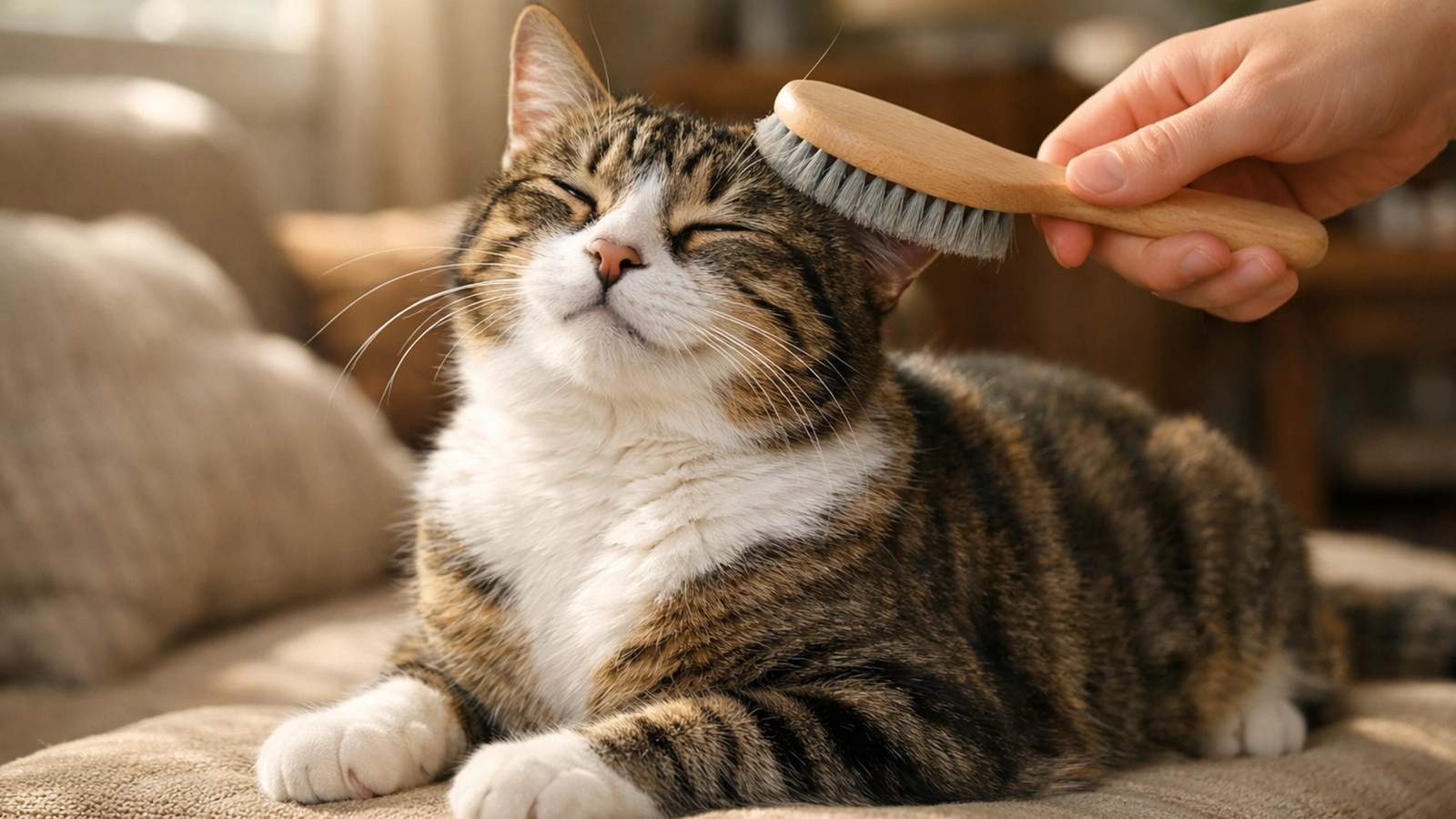
A Beautiful Coat Is More Than Just Looks. An indoor cat’s coat tells a story. It reflects nutrition, emotional well-being, daily habits, and even subtle health changes that aren’t always obvious at first glance. While indoor cats avoid many outdoor hazards, they still rely entirely on their humans to maintain healthy skin and fur.
Grooming isn’t just a cosmetic routine.
It’s a quiet form of communication, a bonding ritual, and one of the most effective ways to support long-term feline health.
Done right, grooming becomes something your cat looks forward to—not something to escape from.
This guide walks you step by step through building the best indoor cat grooming routine: practical, gentle, and grounded in real feline behavior. 💡
Why Indoor Cats Still Need a Structured Grooming Routine
Indoor life reduces exposure to dirt, parasites, and weather extremes.
But it also introduces different challenges.
Less environmental stimulation can mean less natural shedding.
Climate-controlled homes can dry out skin.
And many indoor cats groom less effectively as they age.
A consistent routine helps:
✔️ Reduce shedding and hairballs
✔️ Prevent mats and skin irritation
✔️ Improve circulation
✔️ Detect early physical changes
✔️ Strengthen trust between cat and human
Understanding Your Cat’s Coat Type First
Before choosing brushes or schedules, you need to know what kind of coat you’re working with.
Short-Haired Cats
These coats are sleek and often low-maintenance, but they still shed more than many owners expect.
They benefit from:
-
Weekly brushing
-
Gentle rubber or soft-bristle brushes
-
Focus on loose hair and skin stimulation
Medium-Haired Cats
These coats can mat around friction points.
Extra attention areas:
-
Under the arms
-
Behind the ears
-
Base of the tail
Twice-weekly brushing works well here.
Long-Haired Cats ⭐
These cats need daily or near-daily care.
Without it, mats can form painfully fast.
Tools matter more than frequency:
-
Wide-tooth combs
-
Detangling sprays (cat-safe)
-
Slow, patient sessions
The Psychology of Grooming: Timing Matters 🕰️
Cats are creatures of rhythm.
Grooming works best when it fits their natural flow, not yours.
Ideal grooming moments:
-
After meals 🍽️
-
During evening wind-down
-
Following a play session
Avoid:
-
Right after waking
-
During zoomies
-
When unfamiliar guests are present
Cats associate grooming with vulnerability.
Calm surroundings reduce resistance dramatically.
The Essential Grooming Toolkit (Indoor Edition)
You don’t need a drawer full of gadgets.
You need the right tools.
Must-Have Basics ✔️
-
Soft-bristle brush or rubber grooming brush
-
Stainless steel comb (fine + wide teeth)
-
Cat nail clippers
-
Unscented grooming wipes
-
Microfiber towel
Optional but helpful:
-
Cat-safe detangling spray
-
Grooming glove for sensitive cats
Avoid tools designed for dogs—they’re often too harsh.
Step-by-Step: The Ideal Indoor Grooming Session
Step 1: Start With Hands, Not Tools ✋
Before brushing, run your hands slowly over your cat.
This:
-
Warms the skin
-
Helps spot bumps or flakes
-
Signals gentle intent
Talk softly.
Move slowly.
Cats read body language far more than words.
Step 2: Brushing Without Stress
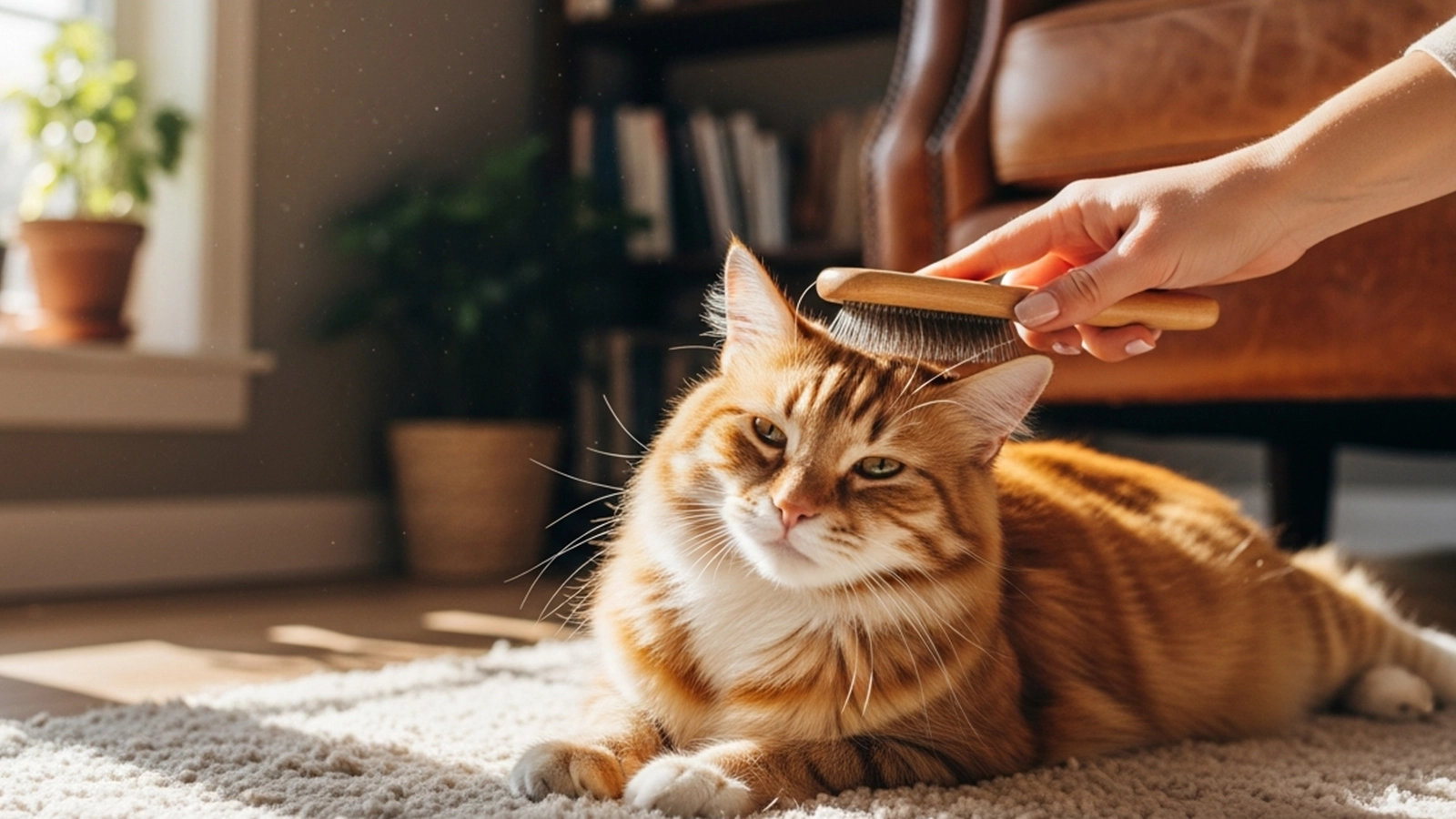
Brush in the direction of hair growth.
Short sessions beat long ones:
-
3–5 minutes for beginners
-
Gradually increase over time
Watch for signs of overstimulation:
-
Tail flicking
-
Ear flattening
-
Skin rippling
Stop before frustration sets in.
That’s how trust grows.
Step 3: Dealing With Shedding and Hairballs 💡
Indoor cats shed year-round due to stable temperatures.
Regular brushing removes loose hair before it’s swallowed.
Extra help:
-
Hydration (wet food or water fountains)
-
Omega-3-rich diets
-
Occasional grooming wipes
Hairballs aren’t just messy—they can indicate grooming imbalance.
Skin Health: What Healthy Skin Actually Looks Like
Healthy skin is:
-
Smooth
-
Supple
-
Free of odor
-
Light pink (or pigmented evenly)
Red flags 🚩:
-
Excessive dandruff
-
Oily patches
-
Redness or scabs
-
Sudden over-grooming
Skin issues often show up before coat problems.
Bathing Indoor Cats: Rare, But Sometimes Necessary 🚿
Most indoor cats never need a bath.
But exceptions include:
-
Greasy buildup
-
Medical shampoos
-
Senior cats with limited mobility
If bathing is necessary:
-
Use cat-specific shampoo only
-
Keep water lukewarm
-
Dry thoroughly and warmly
Never force a bath unless advised by a vet.
Nail Care Without Drama ✂️
Trim nails every 2–4 weeks.
Tips:
-
Trim only the clear tip
-
Use treats as positive reinforcement
-
Stop if your cat becomes tense
Many owners underestimate how much nail comfort affects posture and grooming behavior.
Grooming and Emotional Safety Go Hand in Hand 🤍
A cat who feels safe will allow deeper care.
Routine, predictability, and calm surroundings matter just as much as technique.
When Grooming Becomes a Bonding Ritual
Some of the strongest human–cat bonds form quietly on the couch with a brush.
Cats remember how you make them feel.
Over time, grooming becomes:
-
A trust exercise
-
A comfort signal
-
A shared routine
A Real-Life Moment 🐱
A senior indoor cat named Luna stopped grooming her back legs.
Her owner noticed during a routine brushing session.
It turned out to be early joint stiffness—caught early because grooming was consistent.
Small routines save big problems.
Grooming Adjustments for Aging Indoor Cats
As cats age:
-
Skin becomes thinner
-
Coats lose elasticity
-
Grooming ability declines
Adjustments:
-
Shorter sessions
-
Softer tools
-
More frequent checks
Comfort always comes before perfection.
Common Grooming Mistakes to Avoid 🚫
-
Over-brushing sensitive areas
-
Ignoring subtle discomfort signals
-
Using scented products
-
Rushing sessions
-
Skipping routine consistency
Gentle consistency beats intensity every time.
Mini Checklist: Your Weekly Indoor Grooming Rhythm ✔️
-
⬜ Brush coat
-
⬜ Check skin condition
-
⬜ Inspect ears and eyes
-
⬜ Trim nails if needed
-
⬜ Offer treats and calm praise
Simple. Effective. Loving.
Seasonal Grooming Adjustments for Indoor Cats 🌦️
Even indoor cats feel the seasons.
Daylight changes affect hormones.
Indoor heating and air conditioning alter skin moisture.
Shedding patterns quietly shift twice a year.
Spring and Fall: Peak Shedding Seasons 🍂🌸
This is when brushing frequency matters most.
Helpful adjustments:
-
Increase brushing to 3–4 times per week
-
Use a deshedding comb gently, not aggressively
-
Add hydration support (broth toppers, fountains)
You’ll notice less hair on furniture and fewer hairballs.
Winter: Dry Skin Watch 🧴
Indoor heating dries the air.
Signs to watch for:
-
Flaky dandruff
-
Static-prone fur
-
Increased scratching
What helps:
-
Humidifiers
-
Omega-3 supplements (vet-approved)
-
Avoid over-brushing
Summer: Over-Grooming Awareness ☀️
Some cats groom excessively when warm or bored.
Check for:
-
Bald patches
-
Redness
-
Obsessive licking
Increase playtime and environmental enrichment to reduce stress-driven grooming.
Advanced Coat Care for Long-Haired Indoor Cats ⭐
Long-haired cats require strategy, not speed.
Preventing Mats Before They Start
Mats form where friction happens.
High-risk zones:
-
Collar area
-
Underarms
-
Belly
-
Behind ears
Use your fingers to separate fur before brushing.
Never pull through a mat.
That breaks trust instantly.
When Mats Already Exist 😬
If a mat is small:
-
Apply a cat-safe detangler
-
Gently loosen with fingers
-
Use a mat splitter carefully
If a mat is large or tight:
-
Seek professional grooming
-
Or veterinary assistance
Scissors near skin are dangerous—even for experienced owners.
Grooming-Resistant Cats: Winning Cooperation Without Force 🐾
Some cats didn’t grow up with grooming routines.
Others associate brushes with past stress.
The solution isn’t restraint—it’s reframing.
Start Smaller Than You Think
Day 1:
-
Let the brush sit nearby
-
No touching required
Day 2–3:
-
Touch once, reward immediately
Progress slowly:
-
10 seconds becomes 30
-
30 becomes a minute
Food, praise, and calm energy reshape associations.
Tools That Help Sensitive Cats 💡
-
Grooming gloves (feel like petting)
-
Soft silicone brushes
-
Short, predictable sessions
Stop before resistance appears.
That’s how you build consent.
Grooming and Multi-Cat Households 🐱🐱
Each cat needs individual attention.
Even bonded cats groom differently.
Tips:
-
Groom cats separately
-
Avoid shared brushes without cleaning
-
Watch for jealousy cues
Grooming one cat in front of another can create tension—rotate fairly.
How Nutrition Supports Skin and Fur Health 🍽️
No grooming routine works without proper nutrition.
Key coat-supporting nutrients:
-
High-quality animal protein
-
Omega-3 and Omega-6 fatty acids
-
Zinc and biotin
-
Adequate hydration
Dull coats often signal dietary imbalance before visible illness.
The Overlooked Areas Owners Forget to Check 👀
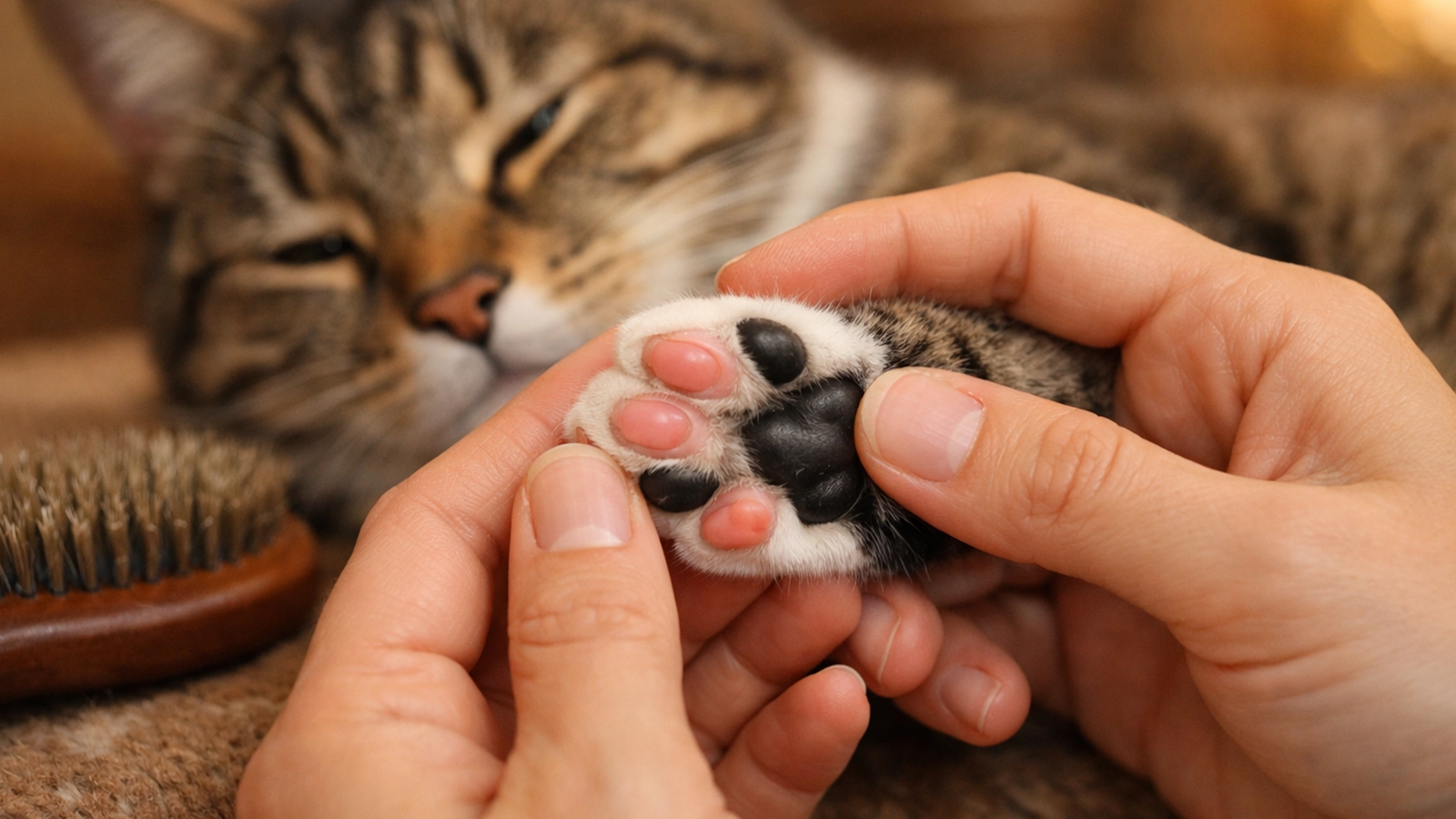
Don’t skip these zones:
-
Paw pads (dryness or cracks)
-
Between toes
-
Chin (feline acne)
-
Base of tail (oil buildup)
These areas reveal early discomfort quickly.
Grooming as a Health Monitoring Tool 🩺
Routine grooming creates familiarity.
You’ll notice:
-
Lumps earlier
-
Weight changes faster
-
Coat texture shifts sooner
This awareness often leads to earlier intervention and better outcomes.
Consistency matters more than perfection.
Grooming Senior Indoor Cats With Extra Care 🤍
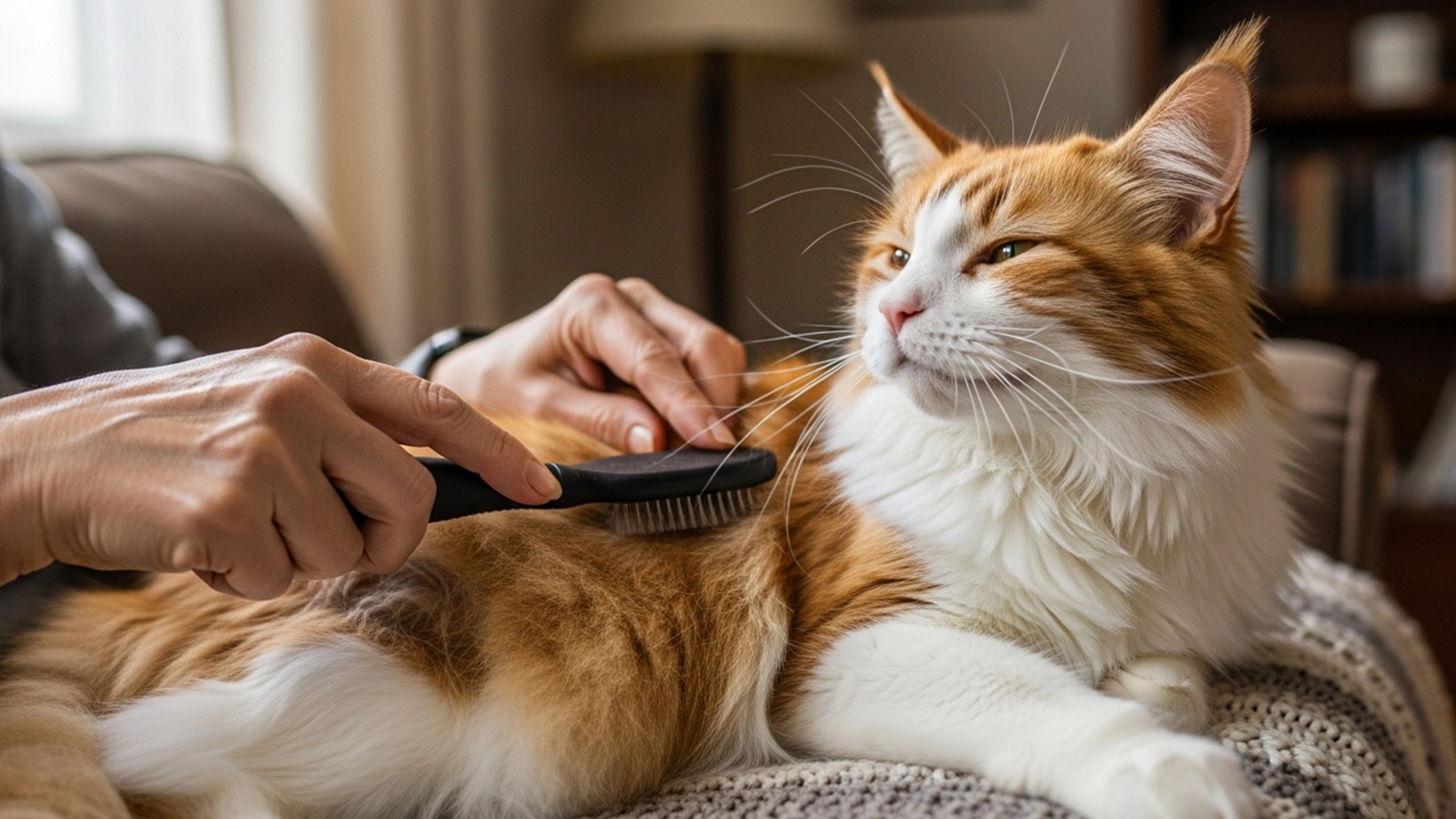
Older cats may:
-
Groom less effectively
-
Have arthritis
-
Tire quickly
Adjustments:
-
Break sessions into segments
-
Focus on comfort zones
-
Support joints while brushing
Grooming becomes a form of caregiving.
Creating a Grooming-Friendly Environment 🛋️
Set the scene:
-
Quiet room
-
Soft surface
-
Familiar smells
Avoid grooming during:
-
Loud noises
-
High household activity
-
Stressful changes
Environment influences cooperation more than technique.
Signs Your Grooming Routine Is Working ✔️
You’ll notice:
-
Softer fur
-
Reduced shedding
-
Less scratching
-
Calm acceptance
-
Improved bonding
Your cat may even seek sessions voluntarily.
That’s the gold standard.
When to Seek Professional Help
Consider professional grooming or veterinary advice if you notice:
-
Persistent mats
-
Skin sores
-
Sudden coat changes
-
Behavioral shifts during grooming
Early help prevents long-term discomfort.
A Gentle Reminder for Cat Parents 💭
Perfection isn’t the goal.
Presence is.
Some days grooming lasts five minutes.
Other days it doesn’t happen at all.
What matters is the relationship you build through care.
Your cat doesn’t measure success by shine—
but by how safe they feel in your hands. 🐾
Final Thoughts: Grooming Is Love in Action 💛
Indoor cats live quieter lives, but that doesn’t mean their needs are simpler.
They rely on observation rather than instinct, on routine rather than environment, and on human awareness rather than chance. Grooming, in this context, becomes far more than a maintenance task—it becomes a language.
Every slow brush stroke says you’re safe here.
Every gentle pause says I’m listening.
Every routine session builds familiarity that helps your cat feel understood, predictable, and secure.
Unlike play or feeding, grooming asks for trust without immediate reward.
That’s what makes it powerful.
Over time, this shared ritual becomes a checkpoint in your cat’s life. You notice subtle shifts—the way their coat feels slightly different, the way they lean in more or pull away sooner, the places they tolerate touch and the ones they don’t anymore. These small details form a quiet map of their physical and emotional world.
For some cats, grooming becomes the moment they choose closeness.
For others, it remains a careful negotiation built on respect.
Both are valid.
What matters is not how perfect the routine looks, but how consistently it reflects patience and care. Even short sessions count. Even imperfect days matter. A missed brush here and there doesn’t undo trust—but rough handling or rushed energy can.
Grooming also reminds us to slow down.
To sit on the floor instead of rushing past.
To notice rather than assume.
To connect without distraction.
In a world that often moves too fast, these quiet moments anchor both cat and human.
Because in the end, a healthy coat is just the visible outcome.
The real success of grooming is a cat who feels seen, respected, and comfortable in their own skin—and in your presence.
That is love, practiced gently, one brush stroke at a time. 🐾