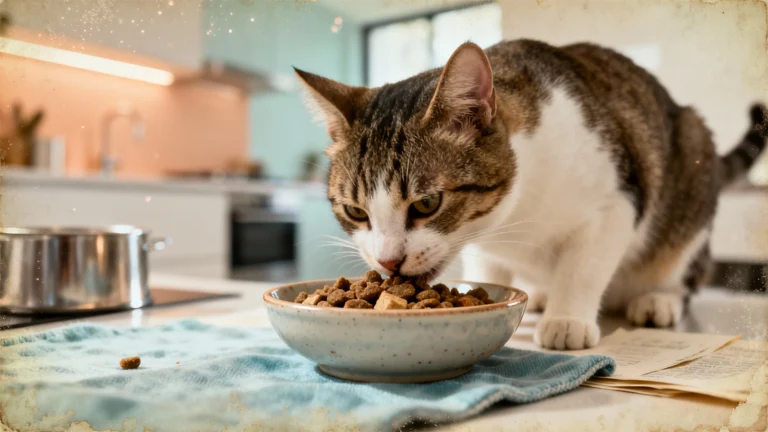
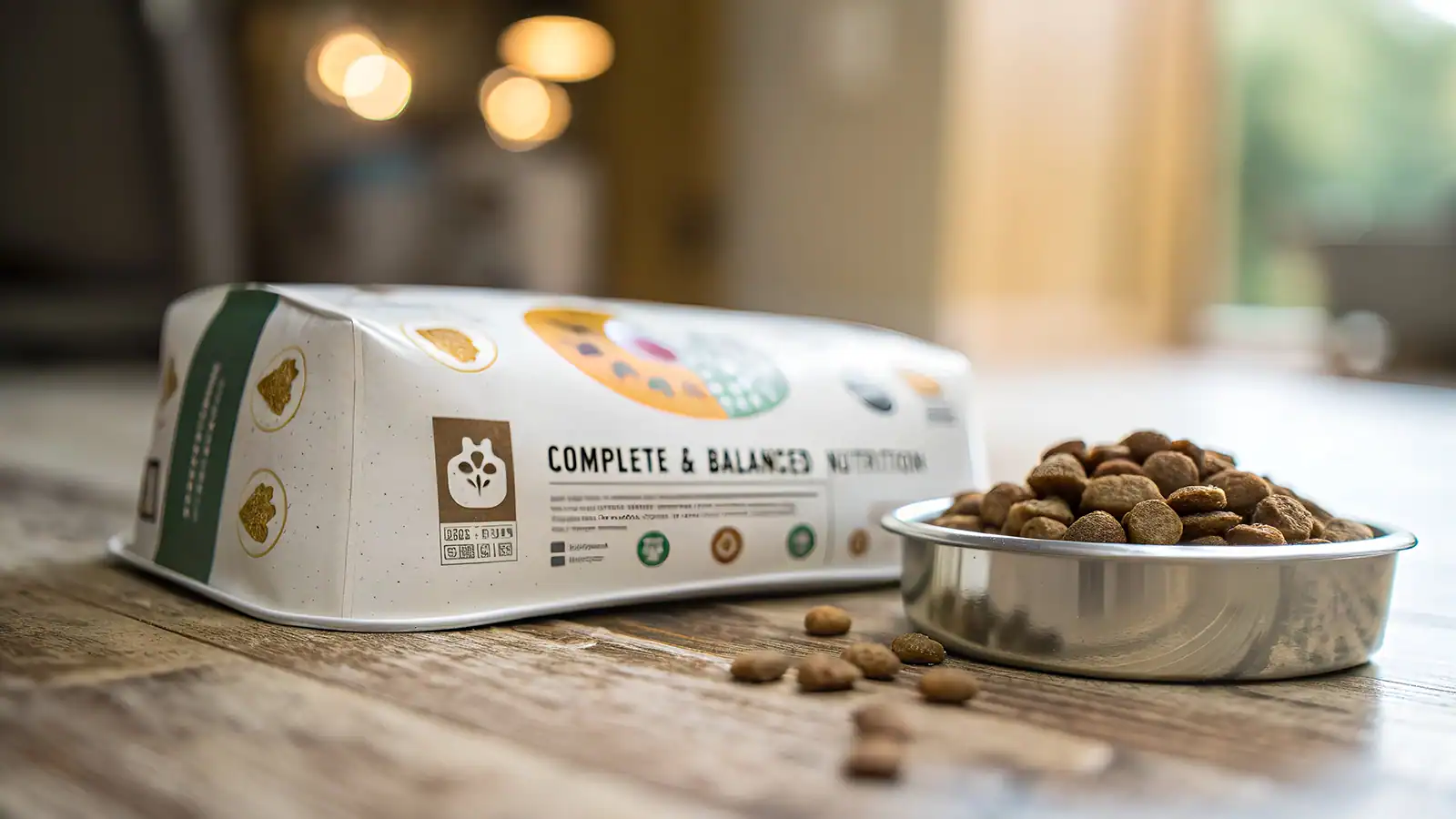
Why the Term “Complete & Balanced” Matters So Much
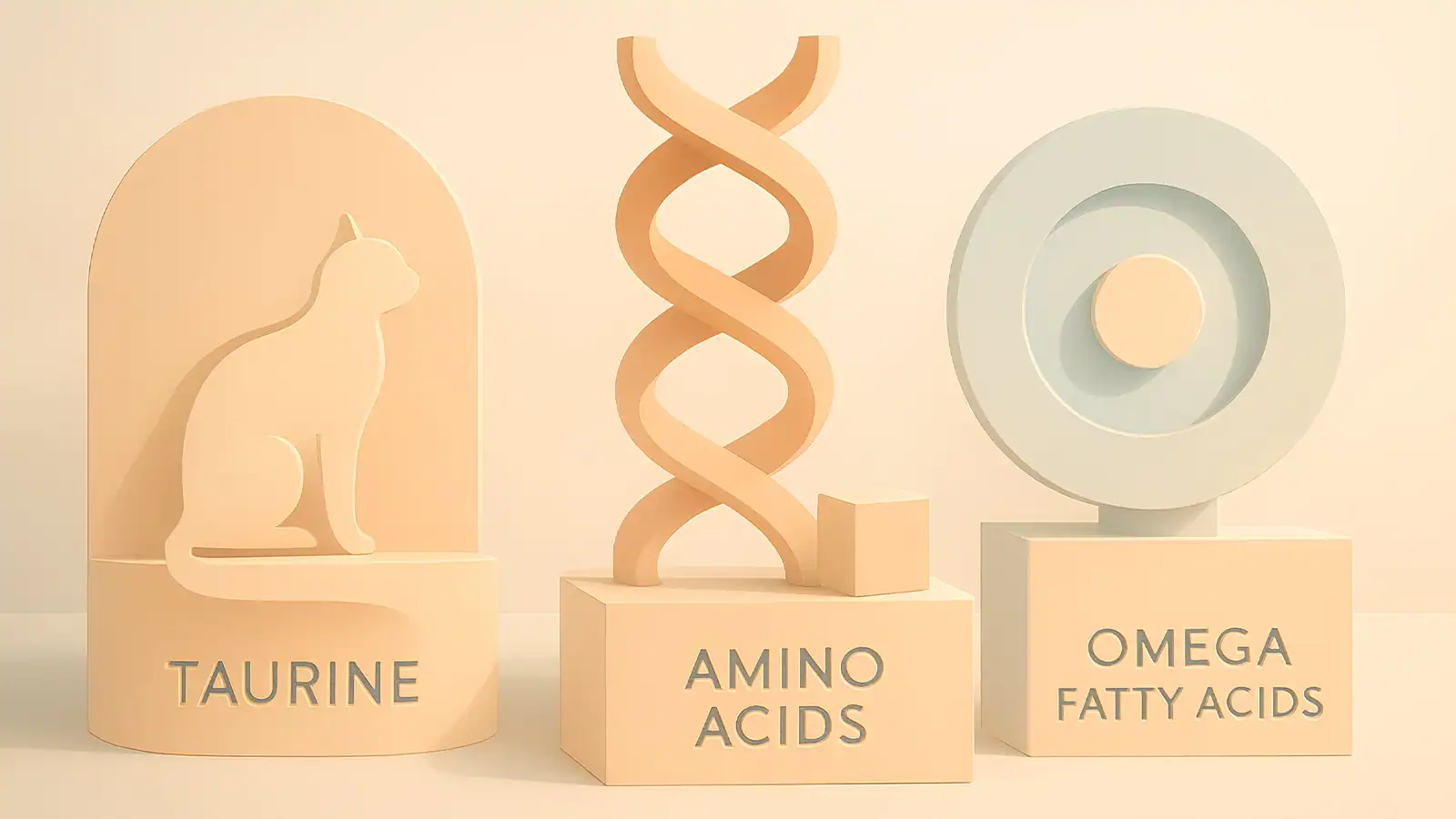
Cats aren’t small dogs. They’re obligate carnivores, biologically dependent on nutrients found naturally in animal tissue. They can’t produce critical nutrients—like taurine, arachidonic acid, preformed vitamin A, or certain amino acids—on their own.
If diet is deficient in even one essential component, a cat can quickly develop:
-
heart problems (dilated cardiomyopathy)
-
vision deterioration
-
immune dysfunction
-
poor muscle maintenance
-
neurological issues
-
skin and coat problems
So when a food is labeled “Complete & Balanced,” it means:
This diet meets the minimum nutritional requirements established for healthy feline survival for a specific life stage.
But does that automatically make it good?
Not necessarily.
This label indicates adequacy, not quality. We’ll get to this important difference later.
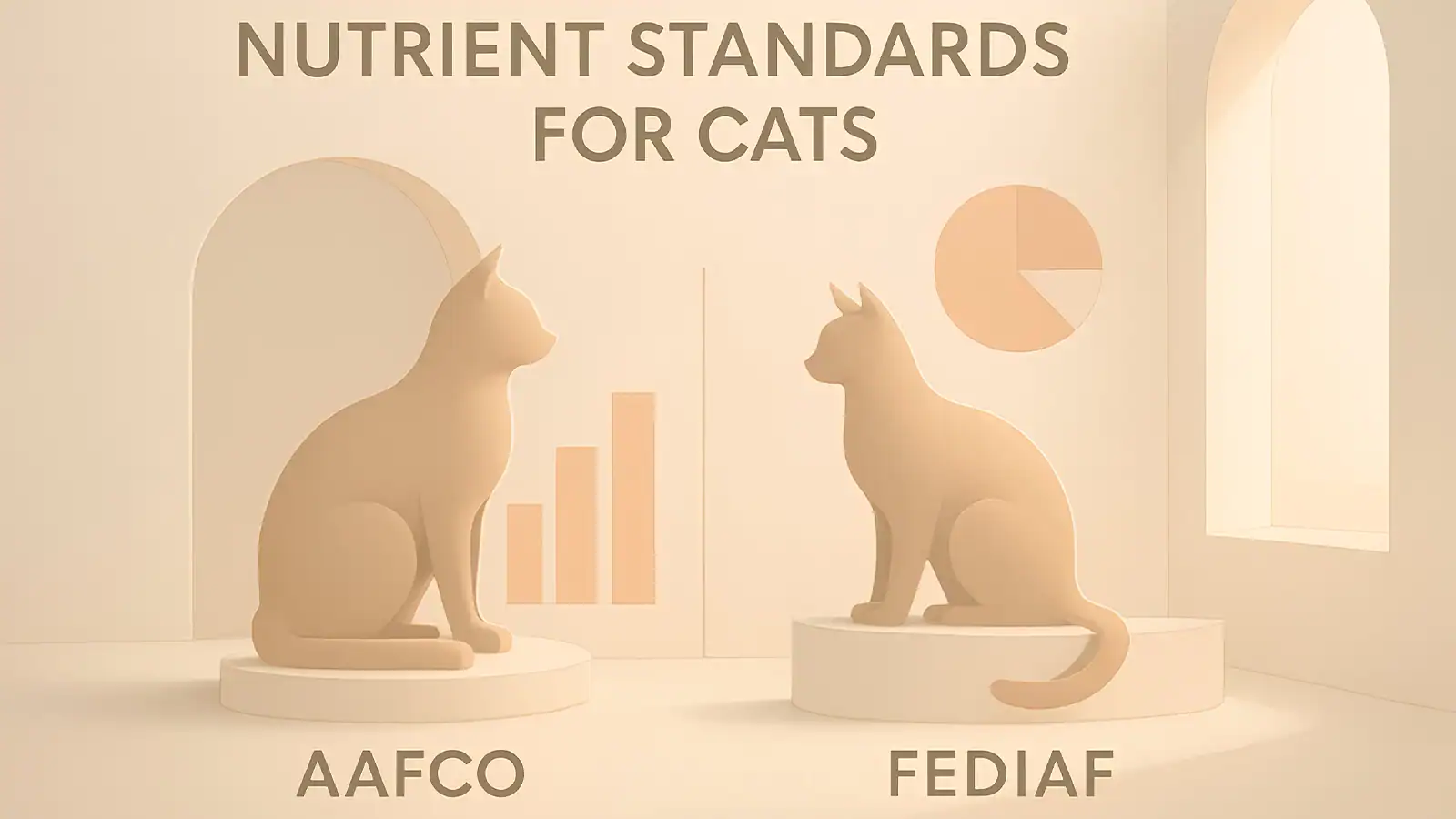
2. Who Defines “Complete & Balanced”? (AAFCO & FEDIAF Explained)
Two major regulatory bodies shape how cat food is formulated:
AAFCO — Association of American Feed Control Officials (United States)
FEDIAF — European Pet Food Industry Federation (Europe)
Both publish detailed nutritional guidelines describing the exact amounts of proteins, fats, minerals, vitamins, and amino acids a diet must contain. These guidelines are based on decades of research into feline biology.
AAFCO Defines 2 Primary Life Stages:
-
Growth & Reproduction (kittens + pregnant/lactating cats)
-
Adult Maintenance
A food may only use the phrase “Complete & Balanced” if it has been proven adequate for one of these life stages.
Manufacturers must prove adequacy through one of two methods:
2.1 Method 1: Nutrient Profile Formulation
This is the most common approach.
Food is sent to a laboratory, where its nutrient composition is compared to AAFCO or FEDIAF minimums.
If every required nutrient meets the standard → the food qualifies.
This method is cheaper, faster, and widely used—but doesn’t guarantee the nutrients are always bioavailable or digestible.
2.2 Method 2: Feeding Trials (The Gold Standard)
This involves real cats eating the food over several weeks in a controlled study.
Researchers monitor:
-
weight
-
blood parameters
-
stool quality
-
coat condition
-
energy levels
-
general health
If the cats remain healthy, the product earns the right to claim “Complete & Balanced” through feeding trials.
Only a small percentage of brands invest in this more rigorous method.
3. What “Balanced” Really Means in Feline Nutrition
To qualify as “balanced,” a food must meet dozens of nutrient requirements—including appropriate ratios. Not just the minimum amounts, but the correct proportions between nutrients.
Some examples:
-
Protein (minimum for adults: 26% dry matter)
-
Fat (minimum for adults: 9% dry matter)
-
Taurine (minimum 0.1% for dry food)
-
Calcium-to-Phosphorus ratio (1:1 to 1.5:1)
-
Omega-6 to Omega-3 ratio must remain stable
-
Vitamin A, D, E cannot exceed toxicity thresholds
-
Essential amino acids like arginine, lysine, methionine, tryptophan must meet precise levels
A diet may contain high protein levels but still be unbalanced if the amino acid distribution is wrong.
Or it may meet all vitamin requirements but exceed safe mineral limits.
This is why consistent formulation and quality control are vital.
4. “Complete & Balanced” Does NOT Mean High Quality
This is the biggest misconception.
A low-quality food made with:
-
rendered by-products
-
excessive plant proteins
-
artificial additives
-
starchy fillers
-
low-grade fats
can still meet AAFCO minimums.
Why?
Because AAFCO defines minimum requirements for feline survival, not optimal nutrition for longevity or peak health.
Think of it this way:
“Complete & Balanced” means the food won’t cause nutrient deficiencies.
It does not mean it’s the healthiest or most biologically appropriate choice.
That distinction is essential for cat owners who want to go beyond bare minimums.
5. Indicators of Truly Good Cat Food (Beyond the Label)
To choose a high-quality food, look deeper than the “Complete & Balanced” logo.
Here are the most critical markers:
5.1 Animal-Based Proteins Should Dominate the Ingredient List
The first 2–3 ingredients should be:
-
chicken
-
turkey
-
beef
-
salmon
-
chicken meal
-
turkey meal
Plant proteins like pea protein or soy isolate artificially inflate protein percentages but lack essential amino acid profiles.
5.2 Clear, Named Fat Sources
Good: chicken fat, salmon oil
Not good: “animal fat,” “poultry fat”
Unnamed fats vary in quality and safety.
5.3 Taurine, Methionine, Arginine Listed Clearly
These amino acids are essential for heart, vision, and metabolic health.
5.4 No Unnecessary Fillers
Cats have extremely limited need for carbohydrates.
While some carbs are fine for kibble structure, ingredients like:
-
corn gluten
-
wheat gluten
-
pea fiber
-
potato starch
shouldn’t dominate the list.
5.5 Feeding Trials Performed
Brands willing to perform feeding trials tend to invest more heavily in research.
6. How Cats Themselves Help You Detect Nutrition Problems
Cats often communicate dietary issues through subtle behavior changes.
And as we explained in our previous guide on how cats recognize their owners, cats rely heavily on routine and human cues.
This familiarity helps you notice changes quickly—like:
-
decreased appetite
-
restlessness
-
excessive grooming
-
dull coat
-
reduced social interaction
-
digestive disturbances
Your ability to read your cat’s behavior becomes an early-warning system for nutritional imbalance.

7. Wet vs. Dry: Which Is More “Complete & Balanced”?
Both can be complete and balanced when formulated correctly—but each has advantages.
7.1 Dry Food (Kibble)
Pros:
-
Affordable
-
Convenient
-
May reduce plaque slightly
Cons:
-
Extremely low moisture
-
Can worsen urinary issues
-
Often higher in plant ingredients
7.2 Wet Food (Canned/Pouch)
Pros:
-
High moisture supports kidney and urinary health
-
More palatable
-
Closer to natural feline prey moisture levels
Cons:
-
More expensive
-
Spoils quickly once opened
⭐ Ideal Strategy: Mixed Feeding
A combination of wet + dry provides hydration, enrichment, variety, and affordability.
8. Understanding Life-Stage Nutrition (Kitten vs. Adult)
Kittens need more:
-
protein
-
fat
-
DHA
-
essential minerals
-
calories overall
Adults require:
-
stable protein levels
-
controlled fat
-
correct mineral ratios
-
ingredients that maintain lean muscle
“Seniors” are not considered a biological life stage by AAFCO, but many brands design senior-specific formulas with:
-
lower phosphorus
-
joint support
-
softer textures
-
easier digestibility
9. Red Flags: When “Complete & Balanced” Is Not Enough
Be cautious if your cat food:
-
lists unnamed meats or fats
-
uses plant proteins to boost numbers
-
contains sugar, caramel, or dyes
-
has a mineral profile approaching upper toxicity limits
-
causes behavioral or digestive shifts
If your cat’s coat becomes dull, energy decreases, or stool changes, consult your vet and consider switching formulas.
10. How to Choose a Truly Excellent Cat Food (Simple Checklist)
Use this quick filter:
✔ Animal protein as first ingredients
✔ Named fat source
✔ Clear taurine + amino acids
✔ AAFCO statement printed in full
✔ Ingredients you recognize and can pronounce
✔ Feeding trials when possible
✔ Company transparency (lab results, sourcing, recalls)
If a food meets these standards, you’re already in the top nutrition tier.

11. Final Thoughts: “Complete & Balanced” Is the Foundation — Not the Finish Line
This label ensures the diet won’t cause nutrient deficiencies.
But optimal cat health requires:
-
digestible proteins
-
appropriate moisture
-
controlled minerals
-
minimal fillers
-
stable fatty acid ratios
-
high-quality, species-appropriate ingredients
Your cat depends on you to choose wisely—and understanding this label is the first step.
External Source (High Authority)
AAFCO Nutrient Guidelines:
https://www.aafco.org